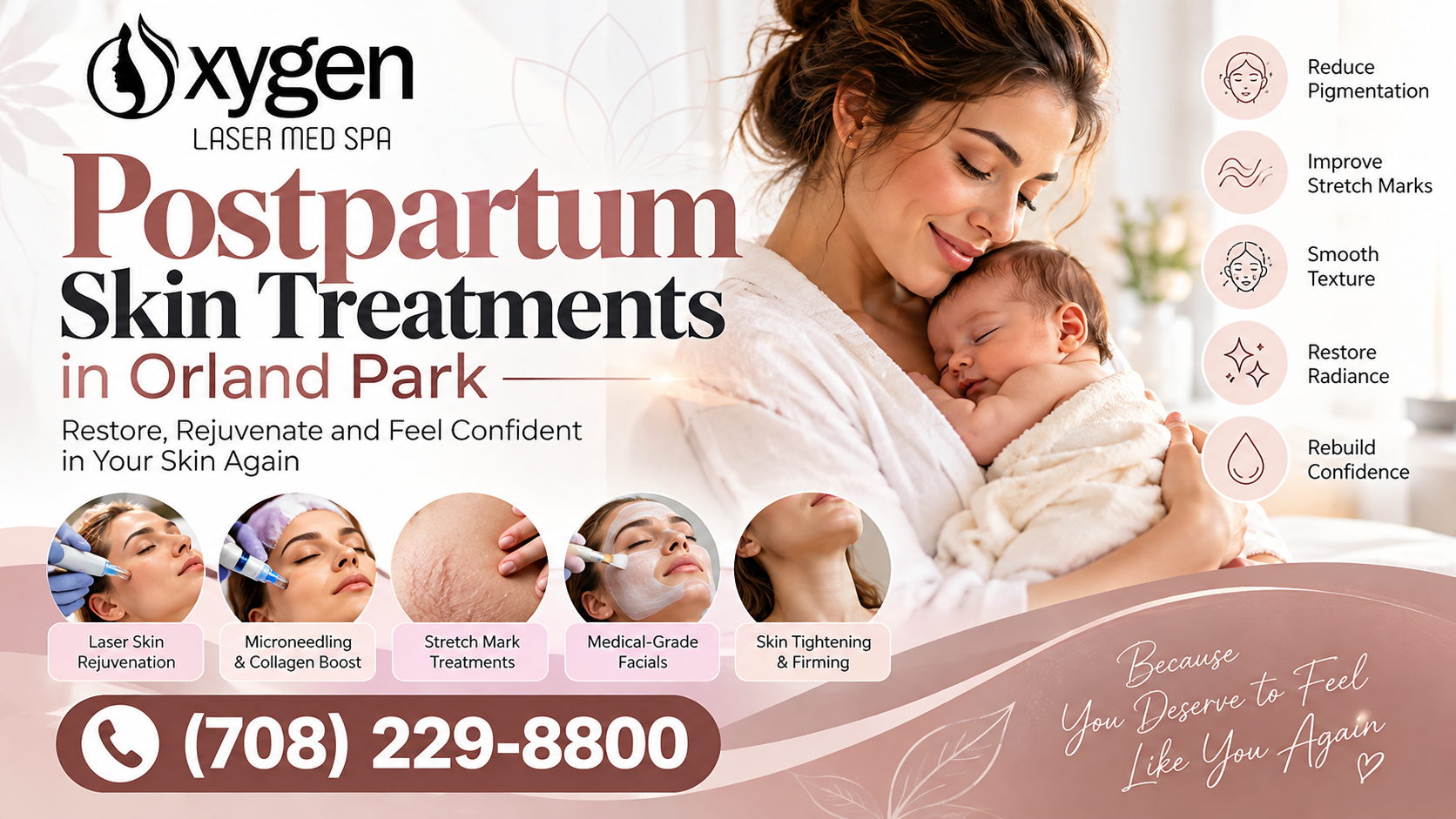
Pregnancy changes your skin in ways nobody fully prepares you for. Stretch marks appear across the stomach, hips and breasts. Dark patches show up on the cheeks and upper lip. The skin on the belly may feel looser than before, and breakouts or uneven texture can linger long after delivery.
Most of these changes are completely normal, and many improve on their own over the first year. For the changes that stay, postpartum skin treatments in Orland Park can help you feel more like yourself again, as long as they are timed safely and matched to the right concern.
This guide explains the most common post-pregnancy skin concerns, which treatments help each one, when it is generally appropriate to start, and how to build a realistic plan around recovery, breastfeeding and a busy life with a new baby.
Most postpartum skin treatments are best started after your body has had time to recover and your physician has cleared you, and many are postponed until you finish breastfeeding. Stretch mark treatment works best while marks are still red or pink. Pregnancy-related dark patches are treated with gentle, sun-protected approaches such as chemical peels. Mild loose skin can improve with skin tightening. A consultation with your full health history is the right first step.
Ready to talk about a plan? Call (708) 229-8800 or contact us to schedule a consultation.
Why Pregnancy Changes Your Skin
During pregnancy, hormone levels shift dramatically, blood volume increases, and the skin stretches quickly to accommodate a growing baby. Those changes can lead to:
- Stretch marks where skin stretched faster than it could adapt
- Dark patches on the face, often called the mask of pregnancy, triggered by hormones and sun exposure
- A dark line down the abdomen that usually fades on its own
- Loose or crepey skin on the stomach after delivery
- Breakouts and uneven texture from hormonal changes
- Changes in hair growth on the face or body
Some of these settle naturally in the months after birth. Others persist and respond well to professional treatment once the timing is right.
When Can You Start Postpartum Skin Treatments?
Timing matters more than anything else. Your body needs time to recover, and some treatments are not recommended while breastfeeding.
| Stage | General Approach |
|---|---|
| First weeks after delivery | Focus on recovery. Gentle cleansing, moisturizing and daily sunscreen. |
| After your postpartum checkup | Ask your physician which treatments are appropriate for you, especially after a C-section. |
| While breastfeeding | Many providers recommend postponing lasers, stronger peels and certain active ingredients. Gentle options may be discussed. |
| After breastfeeding ends | Most treatments can be considered once hormones have settled and your provider agrees. |
Important: Always tell your provider if you are pregnant, breastfeeding or planning another pregnancy. Bring your physician’s guidance to your consultation. Your treatment plan should be built around your health, not a calendar.
New to med spa treatments? Our guide on how to prepare for your first med spa visit explains what to expect at a consultation.
Postpartum Stretch Marks
Stretch marks are the most common postpartum skin concern. They usually appear on the abdomen, hips, thighs and breasts.
Red marks vs. white marks
Newer stretch marks are typically red, pink or purple. Over time, they fade to a lighter, silvery or white color. In general, newer red marks respond better to treatment than older white marks, which is one reason many women start once they are cleared after delivery and breastfeeding, rather than waiting years.
Treatments that can help
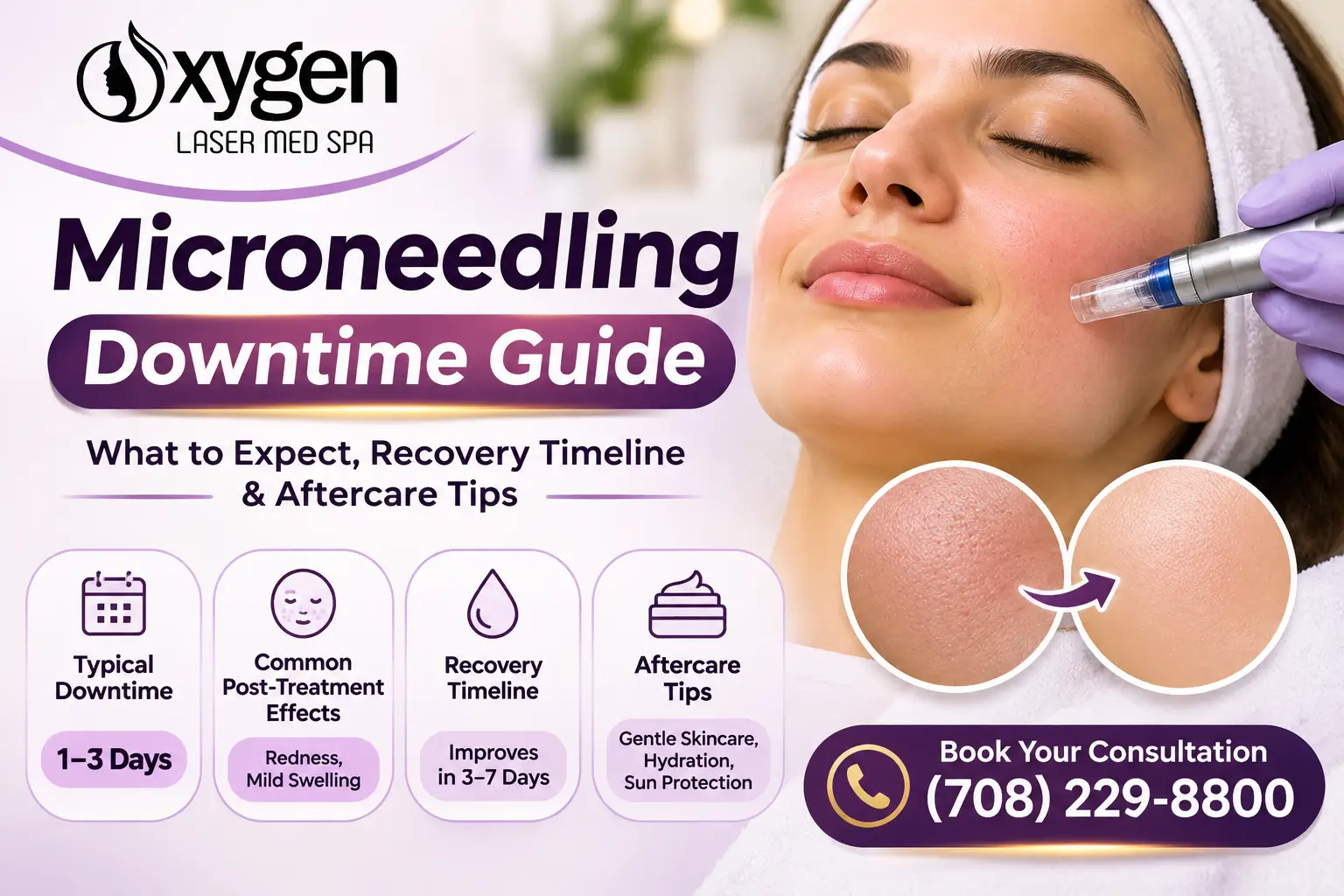
- Microneedling: Stimulates collagen to improve texture and softens the look of stretch marks over a series of sessions.
- Laser and resurfacing treatments: Can improve texture and tone in stretch marks. Your provider will recommend the right option for your skin type.
- A series of sessions: Stretch marks improve gradually, so most plans involve several treatments spaced weeks apart.
Realistic expectations matter. Treatments can make stretch marks softer, flatter and less noticeable, but they rarely disappear completely. Our guide on stretch marks and what actually works covers the options in more detail.
Pregnancy Dark Patches and Uneven Tone
Hormone-related dark patches usually appear on the cheeks, forehead, upper lip and chin. They often lighten after pregnancy, but sun exposure can keep them around or make them darker.
Start with sun protection
Daily broad-spectrum sunscreen is the foundation of any pigmentation plan. Without it, even the best treatments struggle to keep results.
Treatments that can help
- Chemical peels: Lighter, carefully selected peels can gradually even out tone. Our guide to chemical peel strengths explains the difference between light, medium and deeper peels.
- Professional pigmentation treatments: Our skin pigmentation service focuses on uneven tone and dark spots.
- Gentle approaches first: Hormonal pigmentation can react to heat and aggressive treatments, so providers often start conservatively.
Not every dark spot has the same cause. Read what’s actually causing your discoloration and our full breakdown of pigmentation treatment options.
Loose Skin on the Stomach
After pregnancy, the skin on the abdomen may feel softer, looser or crepey. Some of this improves naturally as the body recovers over the first year.
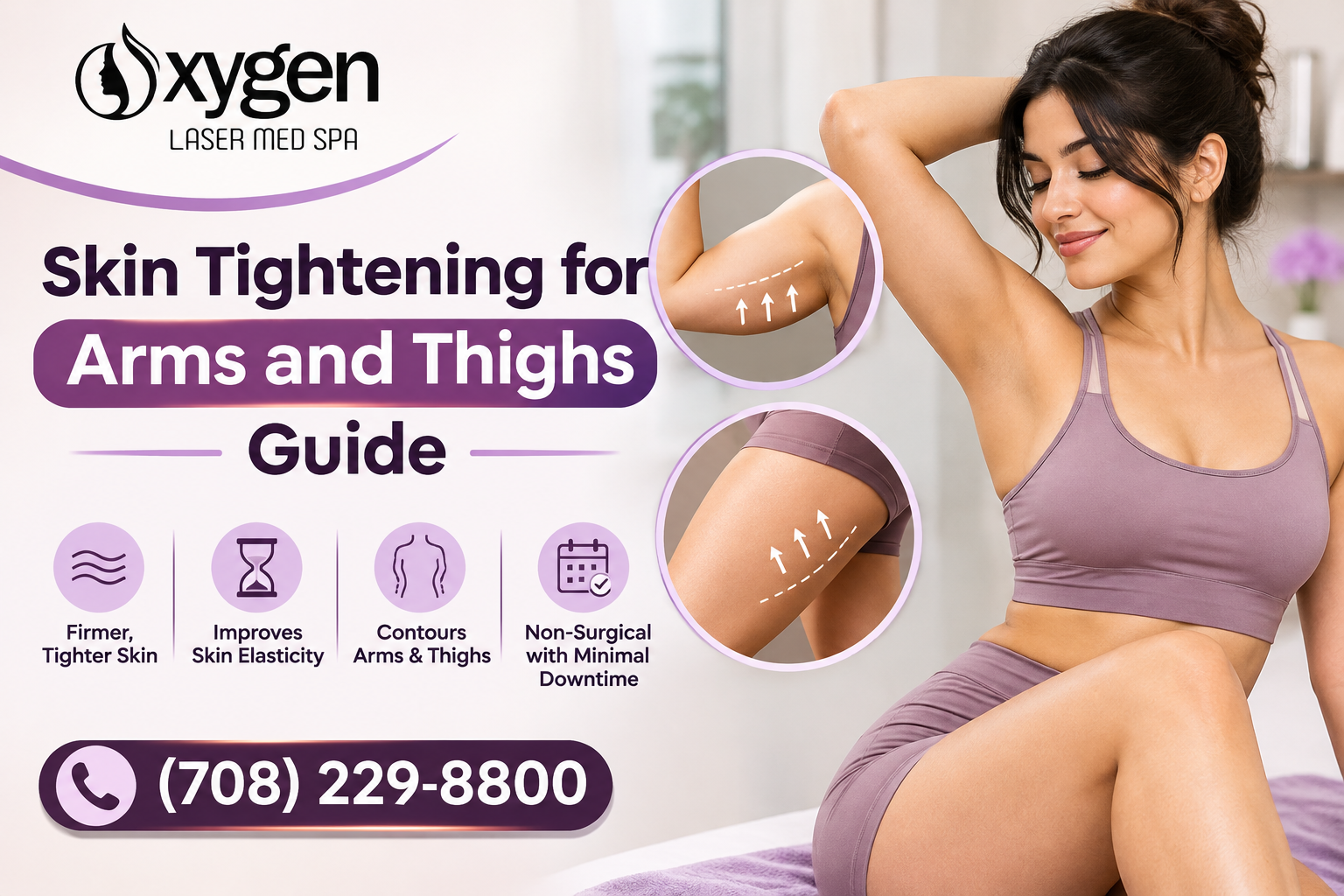
For mild to moderate laxity, non-surgical skin tightening can help improve firmness and texture over a series of sessions. Our comparison of RF vs. ultrasound skin tightening explains how these technologies work.
It is important to be honest about limits. Significant excess skin or separated abdominal muscles are not something a med spa treatment can correct. In those cases, your physician can discuss other options.
Postpartum Breakouts and Texture
Hormonal shifts after delivery can cause breakouts, clogged pores and dull, uneven texture. Gentle professional treatments can help reset the skin:
- HydraFacial: A gentle option to cleanse, exfoliate and hydrate.
- Facials: Customized treatments for tired, dehydrated or congested skin.
- Light peels: When appropriate, can improve brightness and texture.
These are often a good first step for new moms who want visible improvement with very little downtime.
Unwanted Hair Growth
Some women notice new or thicker hair on the face, chin or body during or after pregnancy. Hormonal hair changes may settle over time, so many providers suggest waiting until hormones have stabilized before starting laser hair removal. Once you are ready, our laser hair removal packages make a full treatment series more affordable.
Building a Postpartum Skin Plan
Most new moms have more than one concern. A good plan prioritizes what bothers you most and fits your schedule.
| Concern | Common Treatment Options | Typical Approach |
|---|---|---|
| Stretch marks | Microneedling, resurfacing | Series of sessions, best started while marks are newer |
| Dark patches | Sun protection, chemical peels, pigmentation treatments | Gentle and gradual, with strict sun protection |
| Loose stomach skin | Skin tightening | Series for mild to moderate laxity |
| Breakouts and dullness | HydraFacial, facials, light peels | Low downtime, can repeat monthly |
| Unwanted hair | Laser hair removal | Start once hormones settle |
Fitting treatments into new-mom life
- Choose low-downtime treatments first if sleep and time are limited.
- Book sessions during a regular childcare window so appointments are consistent.
- Bundle treatments where your provider says they can be combined safely.
- Consider a membership if you plan regular sessions. See whether a med spa membership is worth it.
What Do Postpartum Skin Treatments Cost?
Cost depends on which concerns you treat, the size of the treatment area and the number of sessions. Stretch marks and loose skin usually need a series, while a facial is a single visit. Review our pricing by session, our membership options and current hot deals. At your consultation, we will explain the total cost of the plan before you begin.
Serving Moms Across the Southwest Suburbs
Oxygen Med Spa is located on La Grange Road in Orland Park and welcomes clients from Tinley Park, Palos Heights, Frankfort, Oak Lawn, Homer Glen, Lockport and nearby communities. We have served the area since 2008.
Ready to feel like yourself again?
Schedule a consultation and we will build a safe, realistic plan around your goals.
Call (708) 229-8800
Book Appointment
Have a question first? Contact our team.
Postpartum Skin Treatment FAQs
How soon after giving birth can I start skin treatments?
It depends on your recovery and the treatment. Many women begin after their postpartum checkup and once their physician agrees. Some treatments are postponed until breastfeeding ends.
Can I get treatments while breastfeeding?
Some gentle treatments may be appropriate, but many providers recommend postponing lasers, stronger peels and certain active ingredients while breastfeeding. Always tell your provider and follow your physician’s guidance.
Can postpartum stretch marks be removed completely?
Treatments can make stretch marks softer, flatter and less noticeable, but complete removal is rare. Results are usually best when marks are still red or pink.
How many sessions do stretch marks need?
Most people need a series of sessions spaced several weeks apart. Your provider will recommend a number based on how old and how extensive the marks are.
Will pregnancy dark patches go away on their own?
They often lighten in the months after pregnancy, especially with daily sun protection. Patches that remain can be treated with gentle peels and pigmentation treatments.
Why do providers treat hormonal pigmentation gently?
Hormone-related pigmentation can react to heat and aggressive treatment. A gradual approach with strict sun protection usually gives more reliable results.
Can skin tightening help my stomach after pregnancy?
Non-surgical skin tightening can improve mild to moderate laxity and texture. It cannot remove significant excess skin or repair separated abdominal muscles.
Is it safe to treat skin after a C-section?
The incision must be fully healed, and your physician should clear you before any treatment near the area. Bring their guidance to your consultation.
What is a good first treatment for a new mom?
A HydraFacial or customized facial is a popular first step. It refreshes tired, dull or congested skin with little or no downtime.
When should I start laser hair removal after pregnancy?
Many providers suggest waiting until hormones have settled, often after breastfeeding ends, so hair growth patterns are stable before beginning a series.
Should I wait if I am planning another pregnancy?
Tell your provider about your plans. Some women choose to treat between pregnancies, while others prefer to wait. Your provider can help you decide.
How much do postpartum skin treatments cost?
Cost depends on the concerns treated, the size of the area and the number of sessions. We explain the full plan and cost at your consultation, and packages or memberships can lower the per-session price.
Give Your Skin Time, Then Give It a Plan
Your body did something remarkable. It is normal for your skin to look and feel different afterward, and it is normal to want help with the changes that stay.
The best postpartum skin treatments in Orland Park start with safe timing, honest expectations and a plan built around your life. Oxygen Med Spa can help you take the first step. Call (708) 229-8800 to schedule your consultation.