How Intense Pulsed Light Targets Pigment and Redness Differently Than a Peel or Laser, What Results to Expect, and Who It’s Best For — A Guide for Orland Park, Tinley Park, Palos Heights, and Frankfort
By Kabirat A. · Oxygen Med Spa, Orland Park, IL · Updated September 2026
Oxygen Med Spa — 14360 South La Grange Road, Unit D, Orland Park, IL 60462, serving Orland Park, Tinley Park, Palos Heights, Oak Lawn, and Frankfort. Open Monday–Saturday, 10 AM–5 PM, closed Sunday. (708) 229-8800 · book online.
Quick answer: IPL stands for Intense Pulsed Light, and our IPL photo facial uses broad-spectrum light — not a single laser wavelength — to target pigment and redness in the skin at the same time. Our experienced team uses it for exactly this reason: it’s especially effective for sun spots, broken capillaries, rosacea-related redness, and general uneven skin tone from sun damage. Unlike a chemical peel, which works by removing skin layers, IPL works by targeting the pigment and blood vessels underneath the surface, causing them to break down and fade over the following days to weeks without disrupting the skin’s surface the way a peel does.
How IPL Actually Works
IPL devices emit multiple wavelengths of light in a single pulse, which is different from a traditional laser that uses one specific wavelength. This broad spectrum lets IPL target more than one concern in the same session — both pigment (like sun spots) and redness (like visible blood vessels) absorb different wavelengths within that same pulse. The light energy heats and breaks down the targeted pigment or blood vessel, which your body then naturally clears over the following one to two weeks.
What IPL Actually Fixes
Sun spots and age spots. Years of sun exposure cause pigment to build up in patches, and IPL targets that pigment directly, causing spots to darken slightly before flaking off or fading over the following one to two weeks.
Broken capillaries and redness. Small visible blood vessels, often on the cheeks or nose, absorb the light energy and break down, reducing visible redness over subsequent sessions.
Rosacea-related redness. While IPL doesn’t cure rosacea, it can meaningfully reduce the visible redness and flushing associated with it, which is one of the most common reasons clients seek out this treatment specifically.
General uneven skin tone. For skin with a mix of sun damage, mild redness, and pigment irregularities, IPL treats the overall tone rather than one isolated spot at a time.
What IPL Doesn’t Fix
IPL isn’t a texture treatment — it won’t meaningfully improve acne scarring, fine lines, or skin texture the way microneedling or a resurfacing treatment would, since it targets pigment and blood vessels rather than stimulating collagen production. If texture is your primary concern rather than tone and redness, IPL likely isn’t the most direct treatment for that specific goal. For deeper or more stubborn pigmentation concerns, our dedicated skin pigmentation treatments may be worth discussing alongside IPL at your consultation.
How IPL Compares to a Chemical Peel
Both treatments can improve skin tone, but they work through entirely different mechanisms. A chemical peel removes damaged outer layers of skin through exfoliation, which involves visible peeling as part of the process. IPL targets pigment and blood vessels beneath the surface without removing skin layers, so there’s typically no peeling — though treated spots may temporarily darken before flaking off over the following week or two. Some clients use both as part of a broader skin plan, since they address overlapping but not identical concerns.
What a Session Actually Involves
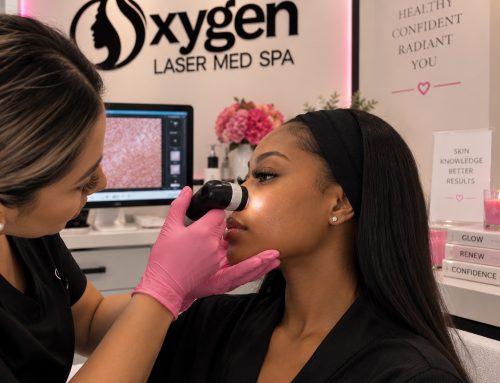
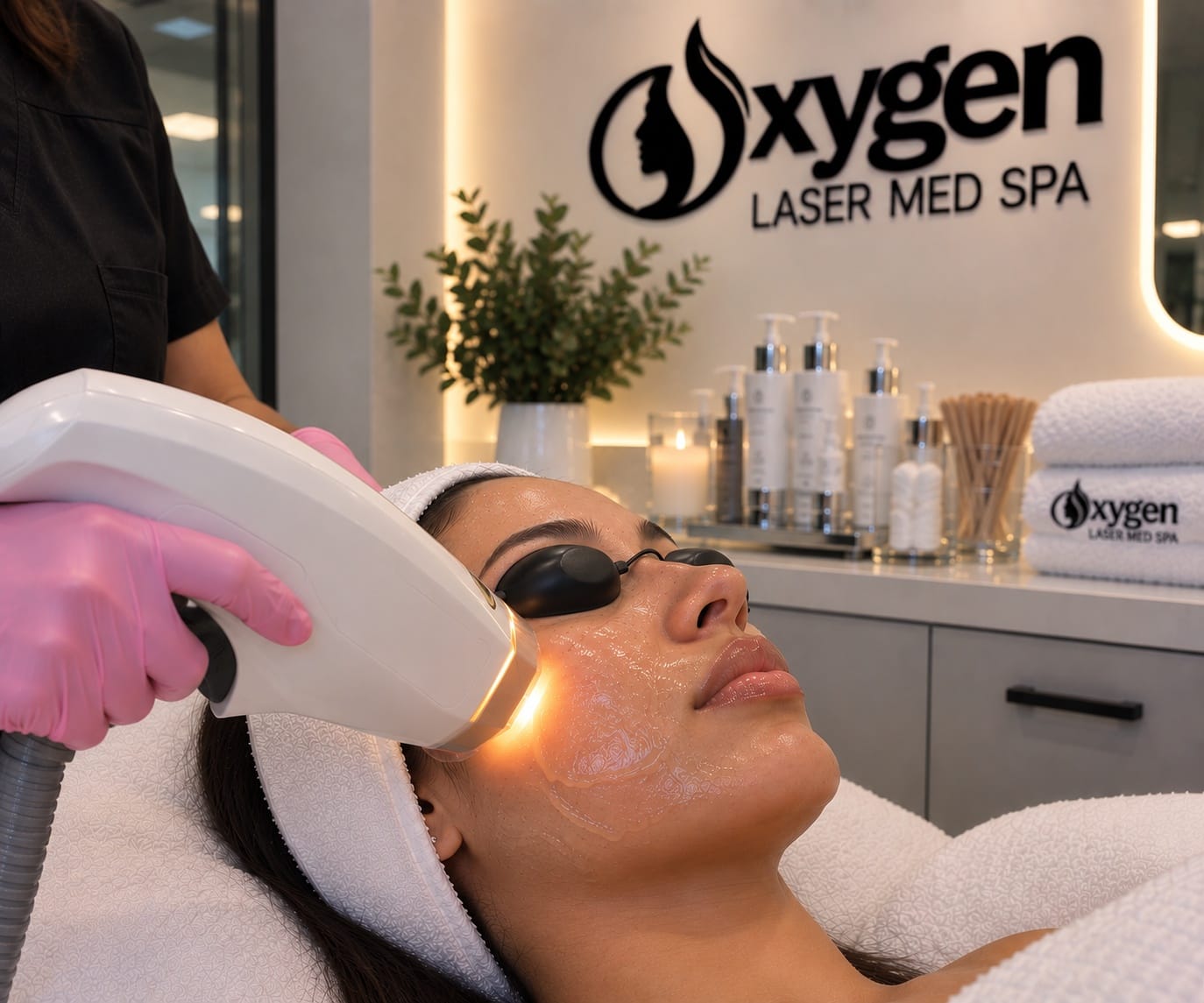
A cooling gel is typically applied to the treatment area, and the IPL device delivers pulses of light across the skin. Most clients describe a warm, snapping sensation, similar to a rubber band lightly flicking the skin. Sessions are relatively quick, and most people return to normal activities immediately afterward, though sun protection is essential in the days following treatment since skin is more light-sensitive.
What Recovery Actually Looks Like
Treated pigment often appears slightly darker for several days before flaking off naturally — this is expected and not a sign of irritation. Mild redness, similar to a light sunburn, is common immediately after treatment and typically resolves within a day. There’s generally no significant downtime, which is part of why IPL is a popular option for clients who want visible improvement without planning around a longer recovery.
How Many Sessions You’ll Actually Need
Most clients need a series of sessions, spaced several weeks apart, for the most noticeable improvement in tone and redness — a single session can help, but cumulative treatments tend to produce more significant, longer-lasting results. Your provider can map out a realistic plan based on how much sun damage or redness you’re addressing.
Frequently Asked Questions
Is IPL the same as laser treatment?
Related but not identical. IPL uses multiple wavelengths of light in one pulse, while a traditional laser uses a single specific wavelength. This is part of why IPL can address both pigment and redness in the same session.
Does IPL hurt?
Most clients describe a warm, mild snapping sensation rather than significant pain. Numbing isn’t typically necessary, though your provider can discuss options if you’re sensitive.
How soon will I see results?
Treated pigment often darkens and flakes off within one to two weeks. Redness improvement typically builds gradually across a series of sessions.
Is IPL safe for all skin tones?
Candidacy depends on your specific skin tone, since IPL targets pigment and can be less appropriate for deeper skin tones due to how the light interacts with melanin. This is assessed directly at a consultation.
Can I combine IPL with other treatments?
Yes, many clients pair IPL with treatments that address texture, like microneedling, since the two work on different concerns and complement each other well.
What does it cost?
Pricing varies by treatment area and number of sessions needed. See our 2026 price list for current rates.
Where are you, and how do I book?
14360 South La Grange Road, Unit D, Orland Park, IL 60462. Book online or call; Monday–Saturday, 10 AM to 5 PM.
See If IPL Fits Your Skin
Whether IPL is the right fit depends on your specific skin tone and concerns, best assessed at a consultation. Book online or call (708) 229-8800.
Oxygen Med Spa · 14360 South La Grange Road, Unit D, Orland Park, IL 60462 · (708) 229-8800 · Mon–Sat, 10 AM–5 PM · Closed Sunday