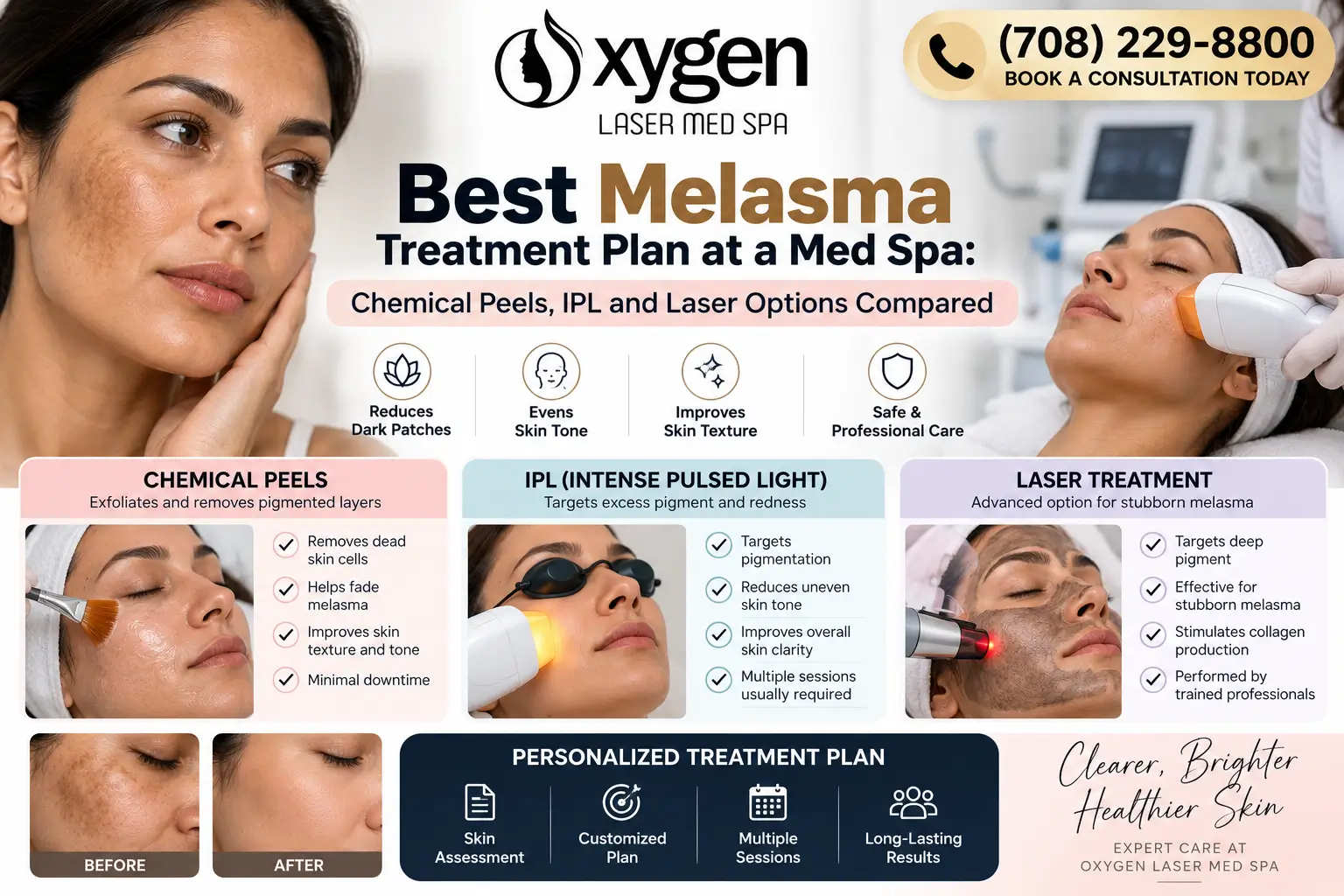
The best melasma treatment plan is a combined plan, not a single treatment. It starts with daily tinted mineral sunscreen and a pigment-suppressing home routine, then adds a series of gentle chemical peels, and in carefully selected cases low-energy laser treatments. IPL can help some lighter skin types but carries a real risk of making melasma worse, especially in medium to darker skin. Most people see meaningful lightening over 3 to 6 months, and because melasma is a chronic condition, ongoing maintenance is what keeps it from coming back.
Key Takeaways
- Melasma is chronic. Treatment controls it and lightens it, but sun, heat, and hormones can bring it back.
- Daily broad-spectrum sunscreen with iron oxides, which blocks visible light, is the foundation of every successful plan.
- Superficial chemical peels are the safest in-office option for most skin types, including darker skin.
- IPL and aggressive lasers can trigger rebound darkening, so they are used cautiously or avoided depending on skin type.
- A realistic plan runs 3 to 6 months, followed by maintenance peels and strict sun protection.
Melasma is one of the most frustrating skin concerns to treat. The brown or gray-brown patches on the cheeks, forehead, upper lip, and chin can fade with treatment, then return after one sunny weekend. Many people try a single laser or a strong peel, see a short-lived improvement, and end up darker than before.
This guide explains why melasma keeps coming back, how chemical peels, IPL, and laser treatments compare for different skin types, what home care and sunscreen really need to look like, and how a structured 3 to 6 month treatment plan and long-term maintenance fit together.
What Is Melasma?
Melasma is a chronic pigmentation condition in which pigment-producing cells, called melanocytes, become overactive and produce excess melanin. It typically appears as symmetrical patches on both sides of the face. It is far more common in women and in people with medium to darker skin tones, including people of Hispanic, Asian, Middle Eastern, South Asian, and African descent.
Melasma is different from sun spots and from the dark marks left behind by acne or irritation. Sun spots are usually small, well-defined, and caused by cumulative sun damage. Post-inflammatory hyperpigmentation follows an injury or breakout. Melasma is broader, blotchier, and driven by a mix of light, heat, and hormones, which is why it behaves so differently. Our article on what is actually causing your discoloration explains how to tell these apart.
Types of Melasma by Depth
- Epidermal: Pigment sits in the upper layer of skin. Patches tend to be light brown with well-defined edges and respond best to treatment.
- Dermal: Pigment sits deeper. Patches look more blue-gray and are slower to improve.
- Mixed: The most common type, with pigment at both levels. It usually improves partially with a combined approach.
Why Melasma Comes Back
Understanding the triggers is the single most important part of treating melasma, because no treatment can outlast constant re-stimulation of pigment cells.
- Ultraviolet light: Even short, incidental exposure through car windows or during a quick walk can restart pigment production.
- Visible light: Light from the sun, and to a lesser degree from screens and indoor lighting, can worsen melasma, especially in darker skin. Standard untinted sunscreens do not block it well.
- Heat: Hot yoga, saunas, cooking over a stove, and intense workouts can darken melasma even without sun exposure.
- Hormones: Pregnancy, birth control pills, and hormone therapy are common triggers. Melasma that appears during pregnancy is often called the mask of pregnancy.
- Inflammation: Aggressive treatments, harsh scrubs, waxing irritation, and reactions to products can trigger rebound pigmentation.
- Genetics: A family history makes melasma more likely and more persistent.
- Stopping maintenance: Many relapses happen when the home routine and sunscreen habits relax after the skin clears.
The core principle: Melasma responds to gentle, consistent treatment and worsens with heat and inflammation. Any plan that relies on high-heat or aggressive treatments without strong pigment control first tends to backfire.
Chemical Peels vs IPL vs Laser for Melasma
Each in-office option works differently, and the best choice depends on your skin type, the depth of your melasma, and how reactive your skin is.
| Factor | Chemical Peels | IPL Photofacial | Low-Energy Laser |
|---|---|---|---|
| How it works | Exfoliates pigmented surface cells and speeds cell turnover | Broad-spectrum light targets brown pigment and redness | Specific wavelengths break up pigment with low heat |
| Best for | Epidermal and mixed melasma | Lighter skin with mild melasma and sun damage | Stubborn or mixed melasma after pigment is controlled |
| Safety in darker skin | Good with superficial peels | Higher risk, often avoided | Possible with conservative settings and experienced providers |
| Risk of rebound darkening | Low with gentle peels | Moderate to high | Low to moderate depending on settings |
| Downtime | Light flaking for a few days | Spots darken and flake for about a week | Minimal redness for a day or two |
| Typical series | 4 to 6 sessions, 3 to 4 weeks apart | 3 to 5 sessions, about 4 weeks apart | 4 to 8 sessions, 2 to 4 weeks apart |
| Typical cost per session | $100 to $450 | $250 to $600 | $300 to $700 |
Chemical Peels for Melasma
A melasma chemical peel is usually the first in-office treatment recommended, because it can be adjusted to almost any skin type. Superficial peels using ingredients such as glycolic acid, lactic acid, mandelic acid, salicylic acid, or combination formulas gradually remove pigmented cells and help home products penetrate more evenly. Medium-depth peels can work faster but carry more risk of irritation and rebound darkening, so they are used selectively.
The goal is steady exfoliation without inflammation. A series of gentle peels nearly always outperforms one strong peel for melasma. To understand peel depths, see chemical peel strengths explained and VI Peel vs TCA peel. You can also learn more about our chemical peel service.
IPL for Melasma: Benefits and Risks
IPL, or intense pulsed light, is excellent for sun spots, freckles, and redness. For melasma, it is a double-edged tool. The light can lift surface pigment quickly, but the heat it generates can stimulate the overactive pigment cells that cause melasma, leading to rebound darkening a few weeks later.
The main IPL for melasma risks include:
- Rebound or worsening melasma, sometimes darker than before treatment.
- Post-inflammatory hyperpigmentation, especially in medium to darker skin tones.
- Short-lived results when melasma is not also controlled with home care.
IPL may be considered for lighter skin types with mild melasma mixed with sun damage, ideally after several weeks of pigment-suppressing home care and with conservative settings. For many people with melasma, especially darker skin, other options are safer. Our guide to what IPL actually does covers where it shines, and our IPL photo facial page explains the treatment itself.
Laser Options for Melasma
Lasers used for melasma are typically low-energy, low-density treatments designed to break up pigment gradually with minimal heat. Common approaches include low-fluence laser toning with longer wavelengths that are gentler on darker skin, picosecond lasers, and gentle non-ablative fractional lasers. Aggressive resurfacing lasers are generally not first-line for melasma because heat and inflammation can make it worse.
Laser works best as a second step, after sunscreen and home care have calmed pigment production and peels have cleared the surface. Combined treatment produces more stable results than laser alone.
Melasma Treatment for Darker Skin
Melasma is more common in medium to deep skin tones, and these skin types are also more prone to post-inflammatory hyperpigmentation. That does not mean treatment is off the table. It means the plan has to be more conservative and more patient.
| Skin Tone | Generally Preferred | Use With Caution or Avoid |
|---|---|---|
| Fair to light | Superficial peels, carefully selected IPL, low-energy laser | High-heat lasers without pigment control |
| Light to medium olive | Superficial peels, low-energy laser toning, topical regimen | Aggressive IPL settings, medium-depth peels |
| Medium brown to deep | Gentle peels such as mandelic or lactic formulas, topical regimen, conservative laser toning | IPL, ablative lasers, deep peels |
For darker skin, the most important safeguards are pre-treating with pigment-suppressing products for several weeks, choosing gentle peels, using conservative energy settings, testing a small area first, and spacing sessions far enough apart for the skin to fully calm down.
Home Care and Sunscreen: The Foundation of Every Plan
In-office treatments accelerate results, but home care is what keeps melasma under control between visits and long after the plan ends.
Sunscreen That Actually Works for Melasma
- Broad spectrum SPF 30 or higher every morning, including cloudy days and indoor days near windows.
- Tinted mineral formulas with iron oxides, which help block visible light that untinted sunscreens miss.
- Reapplication every two hours outdoors, which is easier with a powder or spray sunscreen over makeup.
- Physical protection such as wide-brimmed hats and shade, especially from late spring through early fall.
Ingredients Commonly Used for Melasma
| Ingredient | What It Does | Notes |
|---|---|---|
| Hydroquinone | Strongly reduces melanin production | Prescription strength is used in limited cycles under medical guidance |
| Tretinoin or retinoids | Speeds cell turnover and helps other ingredients work | Can irritate, so introduce slowly |
| Azelaic acid | Reduces pigment and calms inflammation | Well tolerated and often used during pregnancy with medical approval |
| Tranexamic acid (topical) | Interrupts pigment signaling and redness | Oral forms require a prescription and medical screening |
| Vitamin C | Antioxidant that brightens and supports sunscreen | Best used in the morning |
| Niacinamide | Reduces pigment transfer to skin cells | Gentle and pairs well with most routines |
| Kojic acid, arbutin, cysteamine | Non-hydroquinone pigment inhibitors | Useful for maintenance or as alternatives |
Habits That Protect Your Results
- Avoid harsh scrubs, picking, and products that sting or burn.
- Limit heat exposure from saunas, hot yoga, and long hot showers on the face.
- Talk with your doctor if you suspect hormonal medication is a trigger.
- Avoid waxing on areas with melasma, since irritation can darken it.
A 3 to 6 Month Melasma Treatment Plan
The plan below is a typical structure for moderate epidermal or mixed melasma. Your provider adjusts the timing and treatments to your skin type and response.
- Weeks 0 to 2: Consultation and baseline. Skin type, melasma depth, triggers, and medical history are reviewed. Baseline photos are taken, and daily tinted sunscreen and a pigment-suppressing home routine begin.
- Weeks 2 to 6: Pre-treatment phase. The home routine calms pigment cells and prepares the skin. This step is especially important for darker skin and for anyone considering laser.
- Weeks 4 to 16: Chemical peel series. Gentle peels every 3 to 4 weeks, adjusted in strength based on how the skin responds. Most people notice lightening after the second or third session.
- Weeks 8 to 20: Add laser if appropriate. For stubborn or mixed melasma, low-energy laser treatments may be layered in, spaced from peels to avoid irritation.
- Months 4 to 6: Reassessment. Photos are compared with baseline. Strong prescription ingredients may be tapered, and the plan shifts toward maintenance.
- Month 6 onward: Maintenance. Daily sunscreen and home care continue, with periodic maintenance treatments to prevent relapse.
Typical Investment for a Melasma Plan
A first-phase melasma plan that combines a peel series with a home routine commonly costs $800 to $3,000 over 3 to 6 months. Adding a laser series can raise the total to roughly $2,000 to $5,000. Maintenance usually costs much less per year than the initial correction phase.
Maintenance: Keeping Melasma Under Control
Melasma maintenance is not optional. Because the underlying tendency remains, the goal after clearing is to keep pigment cells calm.
- Daily tinted mineral sunscreen all year, with extra protection in summer.
- A simplified home routine with non-hydroquinone pigment inhibitors, a retinoid, and an antioxidant.
- Maintenance peels every 1 to 3 months, often more often in spring and summer.
- A flare plan that resumes stronger ingredients and peels at the first sign of darkening, rather than waiting until the patches are fully back.
- Gentle complementary treatments such as a HydraFacial that keep skin clear and hydrated without heat or irritation.
For a broader overview of how melasma fits with other pigment concerns, see our full breakdown of skin pigmentation treatment options. If your dark patches appeared during or after pregnancy, our guide to postpartum skin treatments covers timing and safety.
When to See a Dermatologist
Most melasma can be managed with a combination of in-office care and home treatment. A dermatologist evaluation is important if a dark patch is changing in shape, color, or size, bleeds, appears on only one side of the face, or does not look like typical melasma. A medical evaluation is also needed for prescription treatments such as oral tranexamic acid or long-term hydroquinone use.
Conclusion
The best melasma treatment plan is a patient, layered approach. It starts with the foundation of daily tinted sunscreen and a pigment-suppressing home routine, adds a series of gentle chemical peels as the first in-office step, and reserves laser for stubborn cases after pigment is under control. IPL can help some lighter skin types, but its risk of rebound darkening makes it a careful choice rather than a default.
Most people see meaningful improvement within 3 to 6 months, and the real success is measured by how well results hold through the next summer. With consistent sun protection, a maintenance routine, and a provider who adjusts treatment to your skin type, melasma can become a condition you manage confidently rather than one that keeps catching you off guard.
Frequently Asked Questions
What is the best melasma treatment plan?
The best plan combines daily tinted sunscreen, a pigment-suppressing home routine, and a series of gentle chemical peels, with low-energy laser added for stubborn cases. Combining treatments gives better and longer-lasting results than any single treatment on its own.
Can melasma be cured permanently?
Melasma is considered a chronic condition, so it is controlled rather than permanently cured. Many people achieve clear or nearly clear skin, but sun, heat, and hormones can trigger it again. Consistent sunscreen and maintenance treatments keep it under control.
Is a chemical peel good for melasma?
Yes. A series of superficial chemical peels is one of the safest and most effective in-office treatments for melasma, especially epidermal and mixed types. Gentle peels spaced 3 to 4 weeks apart generally work better than one strong peel.
Is IPL safe for melasma?
IPL can lighten melasma in some lighter skin types, but it carries a real risk of rebound darkening because its heat can stimulate pigment cells. It is often avoided in medium to darker skin and should only be used conservatively after pigment has been controlled with home care.
What is the best melasma treatment for darker skin?
For medium to deep skin tones, the safest approach is a consistent topical routine, daily tinted mineral sunscreen, gentle peels such as mandelic or lactic acid formulas, and conservative laser toning when appropriate. IPL, deep peels, and aggressive lasers are generally avoided.
How long does it take to see results from melasma treatment?
Many people notice early lightening after two or three peel sessions, usually within six to eight weeks. Meaningful improvement typically takes three to six months, with deeper dermal melasma responding more slowly.
Why did my melasma get darker after treatment?
Melasma can darken after treatments that create too much heat or inflammation, such as aggressive IPL, strong lasers, or deep peels. Sun exposure soon after treatment and stopping home care can also cause rebound. A gentler approach and strict sun protection usually help bring it back under control.
What sunscreen is best for melasma?
A broad spectrum SPF 30 or higher tinted mineral sunscreen containing iron oxides is the best choice, because iron oxides help block visible light that can worsen melasma. Apply it every morning and reapply every two hours when outdoors.
Can I treat melasma during pregnancy?
Many active treatments are postponed during pregnancy and breastfeeding. Sun protection and gentle skincare are the main focus, and some ingredients such as azelaic acid may be used with medical approval. Melasma that appears during pregnancy often improves after delivery and can then be treated more actively.
How much does melasma treatment cost?
Chemical peels typically cost $100 to $450 per session, IPL $250 to $600, and low-energy laser $300 to $700 per session. A first-phase plan combining peels and home care often totals $800 to $3,000, and adding a laser series can bring it to roughly $2,000 to $5,000.
How often do I need maintenance treatments for melasma?
Most people benefit from a maintenance peel every one to three months, along with daily sunscreen and a simplified home routine. Treatments are often increased in spring and summer when sun exposure is higher.
Is microneedling good for melasma?
Gentle microneedling can help some people by improving the delivery of brightening serums, but it can also trigger inflammation and darkening if done too aggressively. It is usually considered only after pigment is controlled and with conservative settings.
Get a Personalized Melasma Plan in Orland Park
Oxygen Med Spa builds pigmentation plans around your skin type, triggers, and goals, combining in-office treatments with the home care that keeps results steady. Learn more about our skin pigmentation treatment or call (708) 229-8800 to book a consultation.