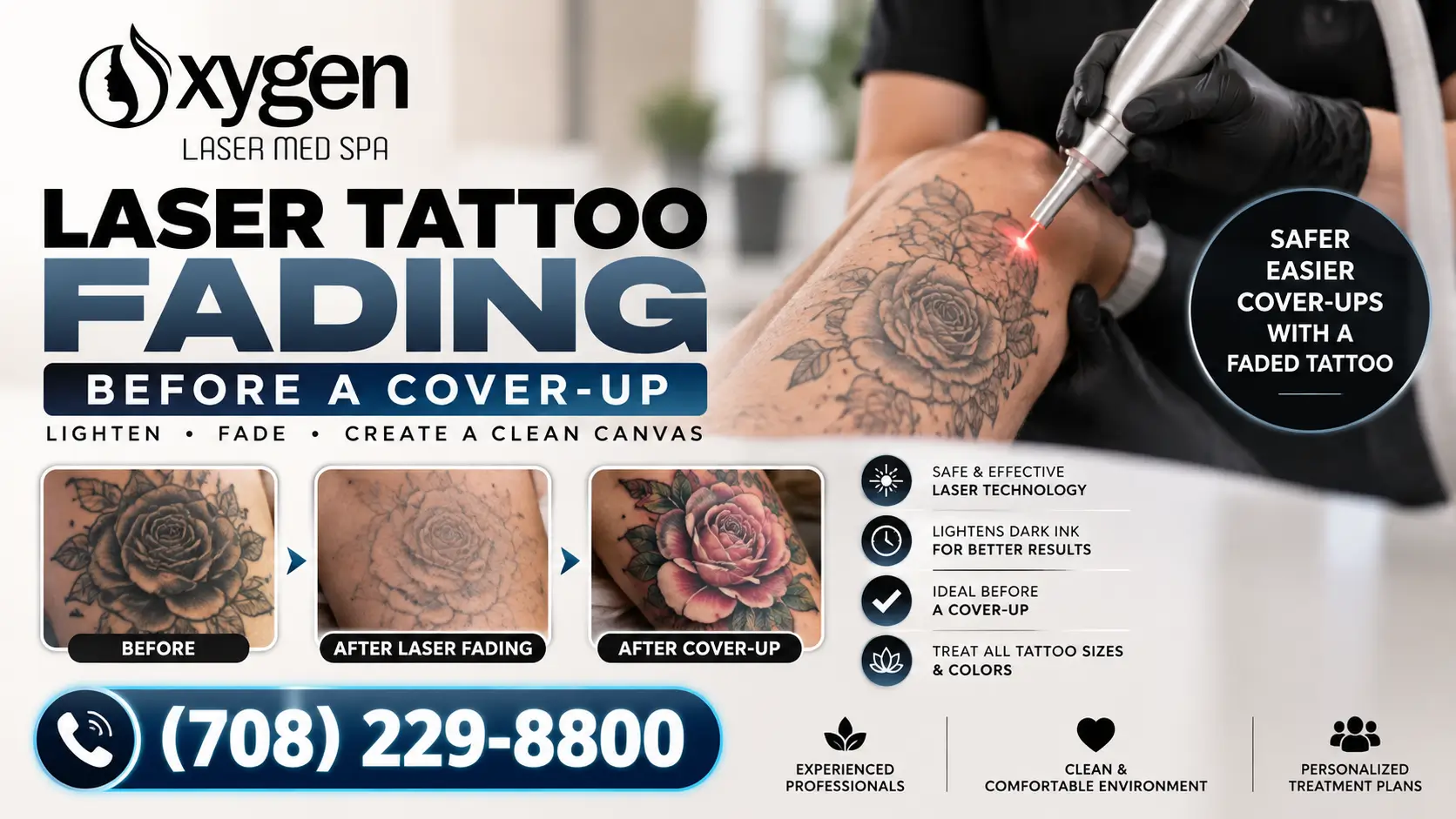
Not everyone who regrets a tattoo wants bare skin. Many people simply want a better tattoo: a new design that reflects who they are now, covering an old name, a faded piece or artwork that never turned out the way they hoped.
The challenge is that a dark or heavily saturated tattoo is hard to cover well. The new design often has to be larger, darker and more limited in color than the client really wants. That is where laser tattoo fading before a cover-up comes in. A few sessions of laser treatment can lighten the old ink enough to give your tattoo artist far more creative freedom.
This guide explains how fading works, how many sessions it usually takes, how to coordinate with your tattoo artist, how long to wait before getting tattooed again and what affects the cost.
Fading for a cover-up usually takes fewer sessions than full removal, because the goal is to lighten the old tattoo rather than erase it. Many clients need a few sessions, spaced several weeks apart, depending on ink color, density and age. Talk with your tattoo artist first so you know how light the old tattoo needs to be. After your last session, allow the skin to fully heal before getting tattooed again, and follow your provider’s guidance on timing.
Considering a cover-up? Call (708) 229-8800 or contact us for a tattoo assessment.
Why Fade a Tattoo Before a Cover-Up?
Tattoo artists can cover many old tattoos without laser treatment, but there are limits. A dark old tattoo usually forces the new design to:
- Be larger than the original, to hide the old outlines
- Use darker colors, such as black, deep blue or dark green
- Include heavy shading or busy patterns that disguise old lines
- Avoid light colors, soft shading and open skin
Fading the old tattoo first removes many of those limits. The result is often a smaller, cleaner, more detailed cover-up that looks like the design you actually wanted, not one built around hiding something.
Fading vs. Full Removal
| Goal | What It Means | Typical Session Count |
|---|---|---|
| Fading for a cover-up | Lighten the old tattoo enough for the artist to work over it | Usually fewer sessions |
| Full removal | Clear the ink as much as possible for bare skin | More sessions, often several more |
Because fading has a lighter target, it is usually faster and less expensive than full removal. For a full overview of removal sessions, read how many sessions tattoo removal takes.
How Laser Tattoo Fading Works
The laser delivers very short pulses of energy that break tattoo ink into smaller particles. Over the following weeks, your body’s natural processes gradually clear those particles, and the tattoo becomes lighter. Each session builds on the last.
Sessions are spaced several weeks apart to give the skin time to heal and the body time to clear ink. Rushing sessions closer together does not speed up results and can increase the risk of skin irritation.
Step 1: Talk to Your Tattoo Artist First
Before your first laser session, meet with the artist who will create your cover-up. Ask them:
- How light does the old tattoo need to be for the design you want?
- Which parts of the old tattoo matter most to fade, such as dark outlines or a name?
- Will the new design be larger or smaller than the old tattoo?
- Do they have a preferred waiting time between your last laser session and the new tattoo?
Bring their answers to your tattoo assessment. A shared target helps your provider plan the right number of sessions and avoids over-treating or under-treating.
Tip: Take a photo of your tattoo before each session. Comparing photos makes it easier for you and your artist to decide when the tattoo is light enough.
What Affects How Many Sessions You Need
| Factor | How It Affects Fading |
|---|---|
| Ink color | Black and dark ink usually respond well; some colors take longer |
| Ink density | Heavily saturated professional tattoos usually need more sessions |
| Tattoo age | Older tattoos have often faded naturally and may respond faster |
| Location | Areas closer to the heart often clear faster than hands, feet and ankles |
| Previous cover-ups | Layered tattoos contain more ink and usually take longer |
| Skin type | Your provider adjusts settings for your skin tone |
| Your target | Lighter targets need more sessions |
Fading Only Part of a Tattoo
You do not always need to fade the whole tattoo. Many artists only need specific areas lightened, such as:
- A name or lettering
- Thick black outlines
- Dark shading in one section
- Areas that would fall under light colors in the new design
Targeted fading can reduce the number of sessions and the cost.
How Long to Wait Before the New Tattoo
After your final fading session, the skin needs time to heal completely before it is tattooed again. Healing time varies by person and by the area treated. Your laser provider and tattoo artist should agree on the timing. Getting tattooed over skin that is still healing can affect both your skin and the quality of the new tattoo.
What to Expect During Each Session
- Before: Your provider reviews your tattoo, skin type and goals.
- During: Sessions are usually quick. Many people describe the sensation as a snapping feeling against the skin.
- After: Temporary redness, swelling, frosting or blistering can occur and usually settle as the skin heals.
Our guide on tattoo laser removal sessions explains the process in more detail.
Aftercare Between Sessions
- Keep the area clean and follow your provider’s aftercare instructions.
- Do not pick at blisters or scabs.
- Avoid sun exposure on the treated area and use sunscreen once healed.
- Avoid soaking the area in pools or hot tubs until it heals.
- Stay hydrated and keep up healthy habits that support healing.
Who Should Wait
Tell your provider if you are pregnant or breastfeeding, have a recent tan, are taking medications that increase light sensitivity, or have a history of poor healing or keloids. Your provider may recommend waiting or adjusting the plan.
Removing a Tattoo Completely Instead
Some clients start with fading and decide they prefer clear skin after all. Because fading and removal use the same treatment, you can continue sessions toward full removal at any time. Learn more about our laser tattoo removal service.
What Does Tattoo Fading Cost?
Cost depends on the size of the tattoo, the number of sessions and whether you are fading all or part of the design. Because fading usually needs fewer sessions than full removal, it typically costs less overall. See our guide to laser tattoo removal sessions and cost in Orland Park, our pricing by session and current hot deals.
Treating Scars or Skin Texture After Removal
Occasionally, an old tattoo leaves behind texture changes from the original tattooing. If that is a concern, treatments such as microneedling or skin resurfacing may help improve the look of the skin. Ask about these options during your consultation.
Serving the Southwest Suburbs
Oxygen Med Spa is located on La Grange Road in Orland Park and serves clients from Tinley Park, Palos Heights, Frankfort, Oak Lawn, Homer Glen, Lockport and nearby communities. New to med spa treatments? Read how to prepare for your first med spa visit.
Ready to make room for the tattoo you really want?
Book a tattoo assessment and we will plan your fading sessions with your artist’s goals in mind.
Call (708) 229-8800
Book Appointment
Have a question first? Contact our team.
Tattoo Fading for Cover-Up FAQs
How many sessions does it take to fade a tattoo for a cover-up?
Usually fewer than full removal. The exact number depends on ink color, density, age, location and how light your artist needs the tattoo to be.
Do I need laser fading to get a cover-up?
Not always. Some tattoos can be covered without it. Fading gives your artist more freedom for a smaller, lighter or more detailed design.
How far apart are fading sessions?
Sessions are spaced several weeks apart to allow the skin to heal and the body to clear ink. Your provider will recommend the right interval for you.
How long should I wait before getting the new tattoo?
Wait until the skin has fully healed after your last session. Your laser provider and tattoo artist should agree on the timing.
Can you fade only part of a tattoo?
Yes. Many clients fade only names, outlines or dark areas that would interfere with the new design.
Which ink colors fade easiest?
Black and dark ink usually respond well. Some colors take more sessions, and your provider will explain what to expect during your assessment.
Does laser fading hurt?
Many people describe it as a snapping sensation. Sessions are quick, and your provider will discuss comfort options with you.
What are the side effects?
Temporary redness, swelling, frosting and blistering are common after treatment and usually settle as the skin heals. Follow aftercare closely.
Can I switch from fading to full removal?
Yes. Fading and removal use the same treatment, so you can continue sessions toward full removal if you change your mind.
Is fading cheaper than full removal?
Usually, because it typically requires fewer sessions. Cost depends on the size of the tattoo and the number of sessions.
Should my tattoo artist be involved in planning?
Yes. Your artist knows how light the old tattoo needs to be for the new design, which helps your provider plan the right number of sessions.
Who should wait before starting fading?
Tell your provider if you are pregnant or breastfeeding, recently tanned, taking light-sensitizing medications or have a history of poor healing. They may recommend waiting.
Give Your Next Tattoo a Better Canvas
A great cover-up starts with the right foundation. Laser tattoo fading before a cover-up lightens the old ink so your artist can create the design you really want, not just one that hides the past.
Oxygen Med Spa has served Orland Park and the southwest suburbs since 2008. Call (708) 229-8800 to book your tattoo assessment.