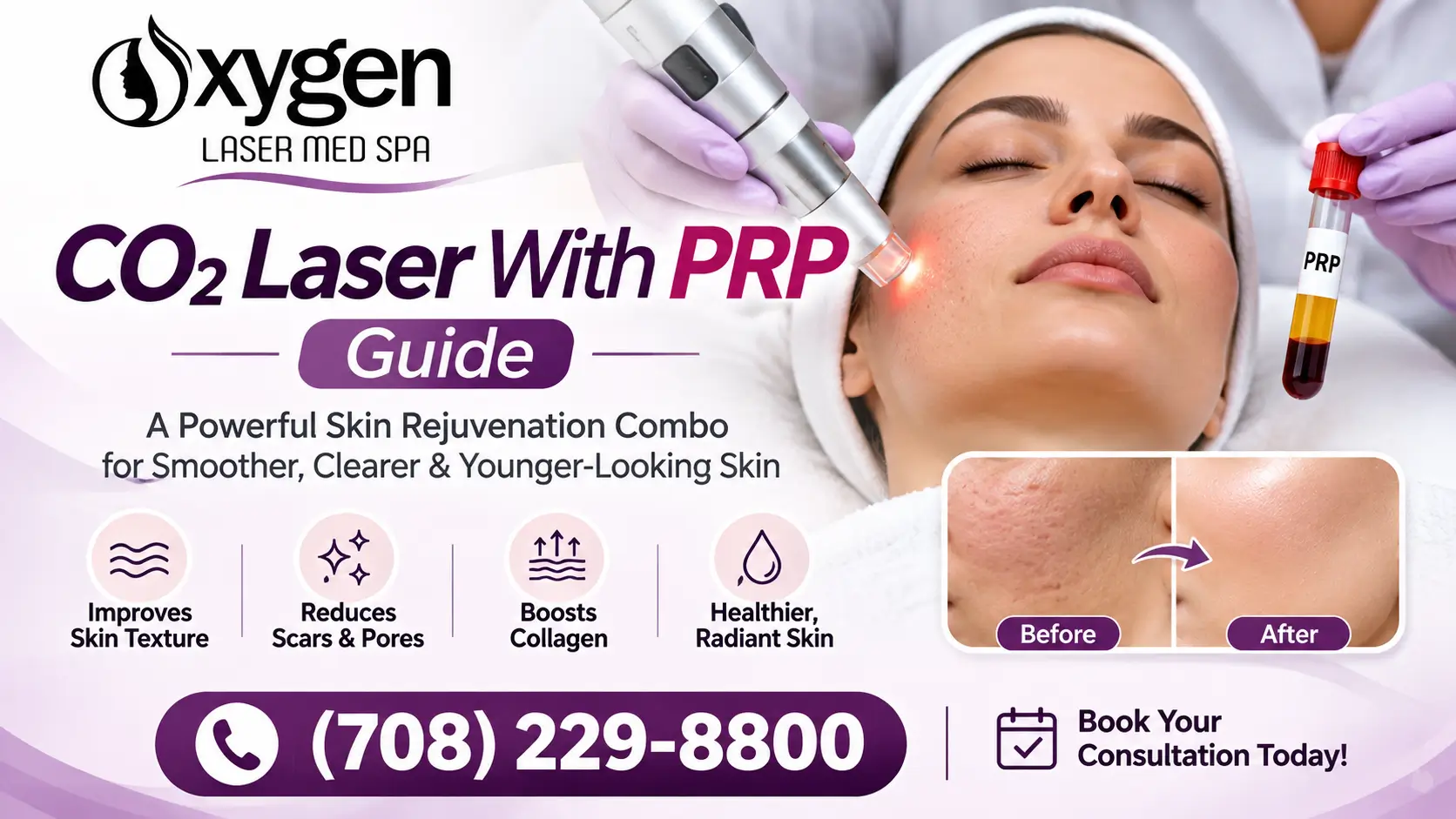
Quick answer: CO2 laser with PRP pairs fractional CO2 resurfacing with platelet-rich plasma made from your own blood. Right after the laser, PRP is applied to the freshly treated skin, or injected, while the tiny laser channels are still open. Studies suggest it may help skin settle faster and add to collagen results, especially for acne scars, though the evidence is still developing. PRP usually adds a few hundred dollars per session to the CO2 price. Healing still takes about 3 to 7 days, sometimes with less redness. At Oxygen Med Spa in Orland Park, your plan starts with a free skin analysis. Call (708) 229-8800 or book your skin analysis!
Licensed laser specialists · Advanced medical equipment · Free skin analysis · 14360 S LaGrange Rd, Orland Park, IL
Fractional CO2 laser is one of the strongest non-surgical treatments for wrinkles, acne scars and sun damage. More clients are now asking whether to add PRP, the treatment some people call the “vampire” add-on, to the same appointment. The idea is simple: the laser creates controlled injury that triggers healing, and PRP delivers concentrated growth factors from your own blood to support that healing. This guide explains how the combination works, what the research says, what it adds to the cost and what recovery looks like, so you can decide if it is worth it for you.
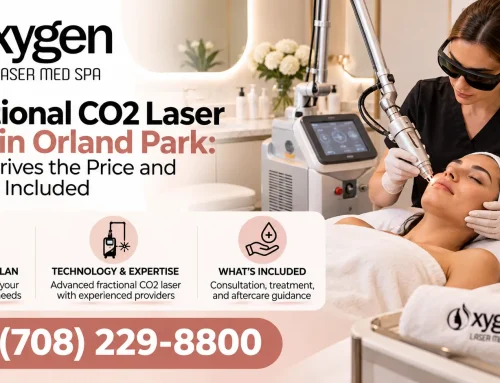
This guide goes with our fractional CO2 laser resurfacing service. For how PRP compares with other treatments, read PRP Facial: How It’s Different From Microneedling.
Wondering if PRP is right for your CO2 treatment? Ask about it during your free skin analysis. Call (708) 229-8800!
What Is PRP?
PRP stands for platelet-rich plasma. A small amount of your blood is drawn, usually from the arm, and spun in a centrifuge. This separates the blood into layers. The layer rich in platelets is collected. Platelets carry growth factors that play a role in wound healing and tissue repair.
Because PRP comes from your own blood, there is no risk of an allergic reaction to the PRP itself. The blood draw is performed by a trained professional, and the whole preparation takes about 15 to 30 minutes.
How CO2 Laser With PRP Works
- Blood draw and preparation. Blood is drawn and spun while your skin is numbed.
- Fractional CO2 laser treatment. The laser creates thousands of tiny treatment columns in the skin.
- PRP application. PRP is applied over the treated skin right away, while the channels are open, or injected into specific areas such as acne scars.
- Aftercare. You go home with instructions, often with guidance to leave the PRP on the skin for several hours.
The laser does the resurfacing. PRP is a supporting step that aims to improve the healing response.
Benefits: What the Research Suggests
| Possible benefit | What studies suggest |
|---|---|
| Acne scar improvement | Several split-face studies found better scar improvement when PRP was added to fractional CO2 than with the laser alone |
| Shorter redness and swelling | Some studies report less redness and faster recovery with PRP, though results vary |
| Collagen and texture | PRP may add to the collagen response the laser triggers |
| Patient satisfaction | Many patients in studies preferred the side treated with PRP |
Who tends to benefit most
- Clients treating acne scars, where the research is strongest. See Ice Pick and Boxcar Acne Scar Treatment.
- Clients who want to shorten visible downtime before an event or return to work.
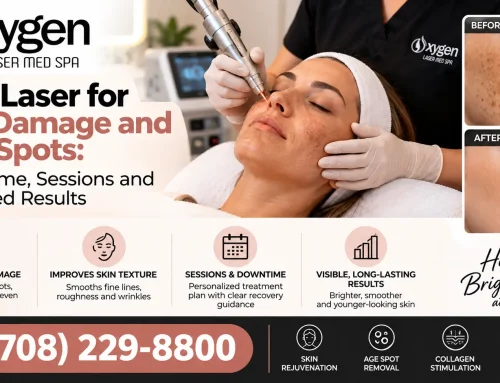
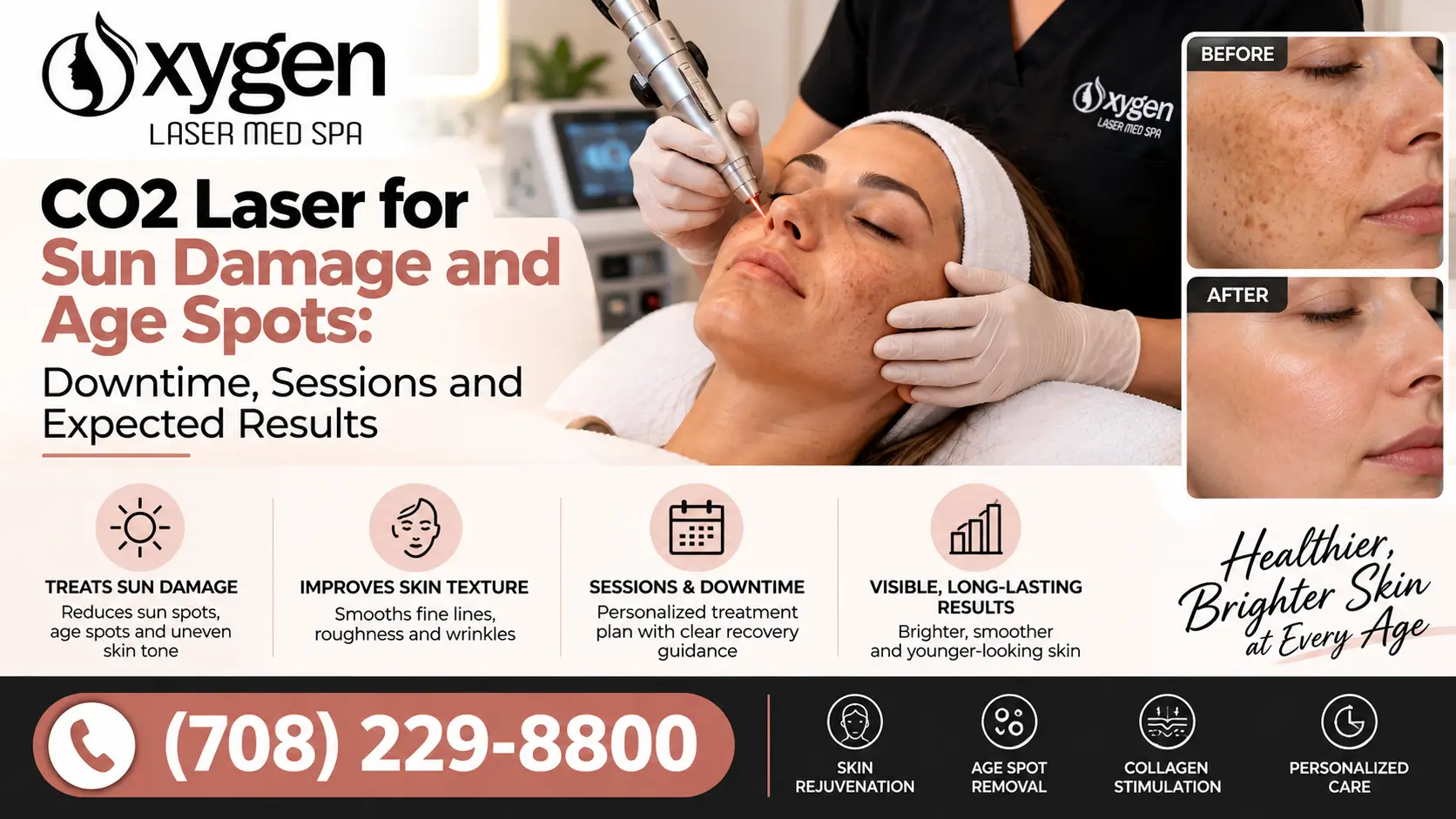
- Clients with sun damage and texture concerns who want the most from one session. See CO2 Laser for Sun Damage and Age Spots.
CO2 Alone vs CO2 With PRP
| Factor | CO2 laser alone | CO2 laser with PRP |
|---|---|---|
| Appointment length | Numbing plus treatment | About 20 to 30 minutes longer for the blood draw and preparation |
| Cost | CO2 treatment price | CO2 price plus the PRP add-on |
| Downtime | About 3 to 7 days | About 3 to 7 days, sometimes with less redness |
| Results | Strong results for lines, scars and sun damage | May add to results, especially for acne scars |
| Extra step | None | A small blood draw |
Cost: What PRP Adds
The CO2 laser is the main cost. PRP is priced as an add-on and usually adds a few hundred dollars to each session. The total depends on:
- The CO2 treatment area and depth, which set the base price. See Fractional CO2 Laser Cost in Orland Park.
- How PRP is used, applied over the skin or injected into scars.
- The number of sessions. If your plan includes 2 to 3 lighter CO2 sessions, PRP may be added to each one.
- Bundles and specials. Check our hot deals, price by session page and membership options.
Is PRP worth the extra cost?
- Often worth considering for acne scars, for clients who want every possible advantage from one deep session, and for those who want the smoothest possible recovery.
- Less important for lighter CO2 treatments focused on tone and mild texture, where recovery is already short.
- Not right for clients who are not comfortable with a blood draw or who have health conditions that rule it out.
Want help deciding? We look at your skin goals and tell you honestly whether PRP is likely to add value.
What Healing Looks Like
| Time after treatment | What is normal |
|---|---|
| Day 1 | Redness, warmth and swelling. PRP may be left on the skin for several hours, as instructed |
| Days 2 to 4 | Skin feels tight and looks bronzed, with fine flaking starting |
| Days 4 to 7 | Most flaking and peeling is done. Some clients see redness settle a little sooner with PRP |
| Weeks 2 to 4 | Pinkness fades, skin looks smoother and brighter |
| Months 3 to 6 | New collagen continues to build, with ongoing improvement |
You may also have a small bruise where the blood was drawn. For a detailed recovery plan, read CO2 Resurfacing Aftercare: A Day-by-Day Recovery Guide.
Aftercare Tips
- Follow instructions on when to wash off PRP, usually after several hours.
- Keep the skin clean and moisturized with the gentle products recommended for you.
- Avoid sun exposure for at least a week, then use daily broad-spectrum sunscreen.
- Skip heavy skin care such as retinoids, acids and exfoliants for about a week.
- Do not pick flaking skin.
- Avoid heavy workouts, saunas and swimming until the skin has healed.
- Call us if you notice signs of infection or anything unusual.
Who Should Not Have PRP
PRP may not be suitable if you:
- Have a blood or platelet disorder
- Take blood-thinning medication, unless your doctor approves
- Have an active infection or are feeling unwell
- Are being treated for cancer
- Are pregnant or breastfeeding
- Are uncomfortable with needles or blood draws
The usual CO2 precautions also apply, including active cold sores, recent tanning and certain acne medications. Tell us about every medication and health condition during your skin analysis.
Other Options to Pair With CO2
- Microneedling with PRP as a lighter alternative for texture and mild scars. See microneedling and CO2 Laser vs. Microneedling.
- Chemical peels for maintenance between resurfacing treatments. See our chemical peel service.
- A full rejuvenation plan combining resurfacing with other treatments. See our full face rejuvenation plan.
About Oxygen Med Spa
Oxygen Med Spa offers fractional CO2 laser resurfacing, microneedling, chemical peels, facials and advanced skin treatments in Orland Park, Illinois, serving Frankfort, Tinley Park and the southwest suburbs. Our licensed laser specialists use advanced medical equipment and plan every treatment around your skin and goals. Visit us at 14360 S LaGrange Rd, Unit D, Orland Park, IL 60462. Learn more about us, see our gallery, or browse all services.
CO2 Laser With PRP FAQs
What does PRP do after CO2 laser?
PRP delivers concentrated growth factors from your own blood to freshly treated skin. It may support healing and add to collagen results, especially for acne scars.
Is CO2 laser with PRP better than CO2 alone?
Several studies show added benefit, especially for acne scars and redness after treatment. Results vary, and CO2 alone still delivers strong results.
How much does PRP add to the cost of CO2 laser?
PRP usually adds a few hundred dollars per session. Your full price depends on the CO2 area, depth and number of sessions.
Does PRP reduce CO2 downtime?
Some clients see redness settle a little sooner, but you should still plan for about 3 to 7 days of downtime.
How is PRP made?
A small amount of your blood is drawn and spun in a centrifuge to separate the platelet-rich layer, which is then applied or injected.
Is PRP safe?
PRP comes from your own blood, so allergic reactions to it are not a concern. Possible side effects include bruising at the draw site. It is not right for people with certain blood disorders or health conditions.
Is CO2 laser with PRP good for acne scars?
Acne scars are where the research for adding PRP is strongest, with several studies showing better improvement than laser alone.
How long does the appointment take?
Adding PRP usually adds about 20 to 30 minutes for the blood draw and preparation, which can happen while you are being numbed.
When will I see results?
Skin looks brighter within a few weeks, and collagen keeps building for about 3 to 6 months.
Can I add PRP to every CO2 session?
If your plan includes a series of lighter sessions, PRP can be added to each one. Your provider will advise what makes sense for your goals.
Who should not get PRP?
People with blood or platelet disorders, those on blood thinners without doctor approval, anyone with an active infection, those in cancer treatment, and people who are pregnant or breastfeeding.
How do I get started?
Call (708) 229-8800 or contact us to book a free skin analysis in Orland Park.
Book Your Free Skin Analysis
Call (708) 229-8800 · 14360 S LaGrange Rd, Unit D, Orland Park, IL 60462 · Monday to Saturday, 10 AM to 5 PM