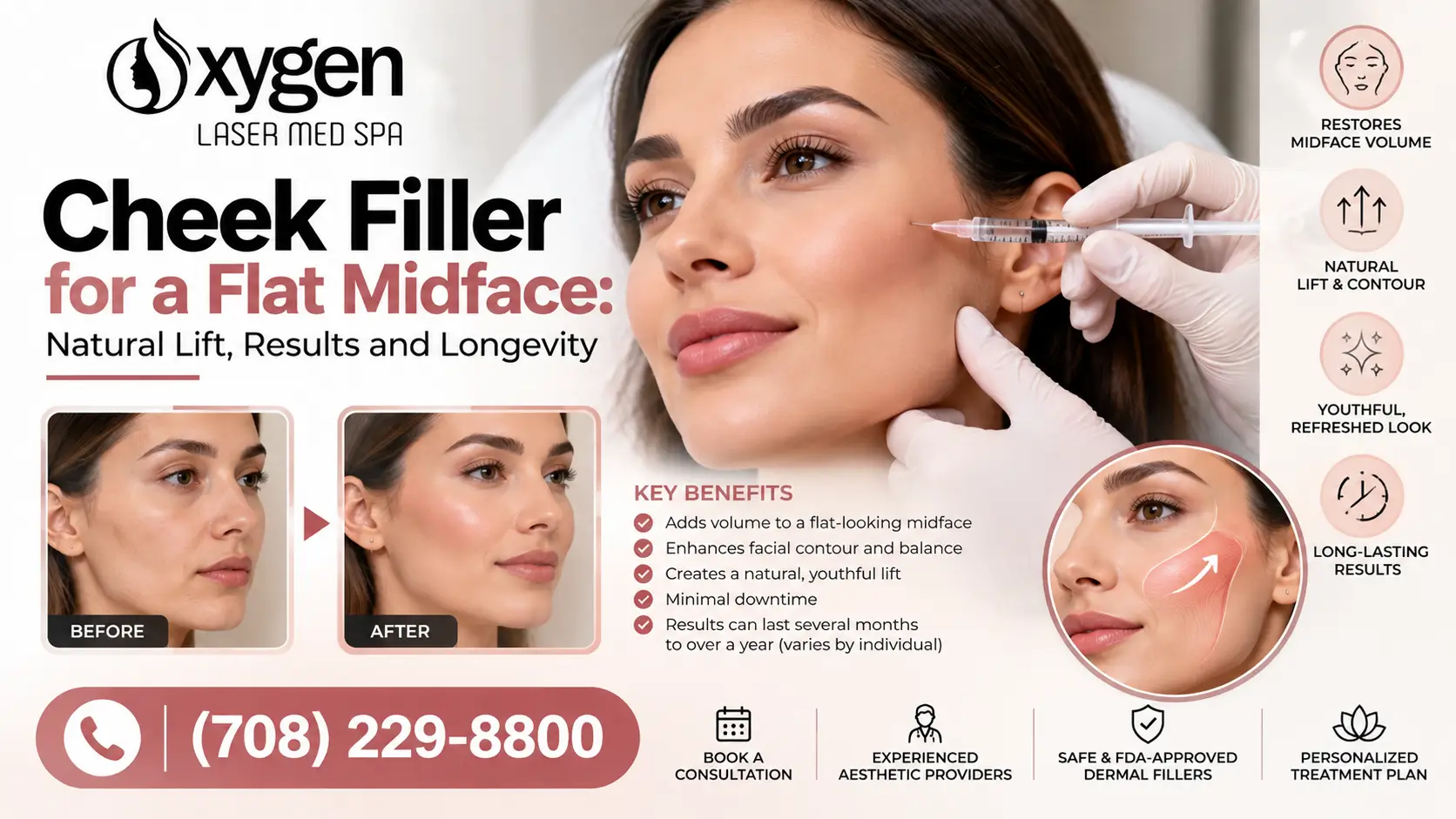
Quick answer: Cheek filler restores volume and support to a flat or hollow midface, which can give a soft, natural-looking lift. Many people need about 1 to 2 syringes in total, results are visible right away and settle over about two weeks, and they often last roughly 12 to 24 months depending on the product and your body. Mild swelling and bruising for a few days are common. Oxygen Med Spa in Orland Park offers Juvederm filler with a personal consultation and a plan built around your face.
Natural-looking results · Personalized treatment plans · Clear aftercare guidance · Consultation before every treatment
As we age, the cheeks lose volume and the midface can begin to look flat, tired or slightly hollow. Many people do not realise that the loss of cheek support is also what makes the lower face and under-eye area look more aged. Cheek filler for a flat midface is a popular, non-surgical way to restore that support and bring back soft contours without changing who you are.
This guide explains who benefits from cheek filler, the difference between lift and volume, how much filler is typical, what the treatment feels like, the results timeline, and how to manage swelling and aftercare. You can also read more about our Juvederm filler treatments at Oxygen Med Spa.
Curious whether cheek filler is right for you? Book a consultation and we will assess your face and recommend a natural plan.
What Is a Flat Midface?
The midface is the area from beneath the eyes to the corners of the mouth, including the cheeks. With age, the fat pads and bone support in this area shrink and shift downward. Weight loss, genetics and sun damage can add to the change.
| Sign | What it looks like |
|---|---|
| Flat cheeks | Less roundness or contour at the apples of the cheeks |
| Hollow under the eyes | A deeper groove or shadow beneath the lower lids |
| Deeper smile lines | Lines from the nose to the mouth look more pronounced |
| Early jowling | The lower face looks heavier as cheek support drops |
| Tired or flat appearance | The face looks less lifted even when you feel rested |
Who Benefits From Cheek Filler?
Cheek filler is most helpful for people who want to restore volume and support without surgery. You may be a good candidate if you:
- Notice your cheeks look flatter or more hollow than they used to.
- Have lost facial volume with age or after weight loss.
- Want a soft lift to the midface and a gentler look to the under-eye area.
- Were born with a naturally flat midface and want more definition.
- Want visible improvement with little downtime.
Lift vs Volume: What Cheek Filler Actually Does
Filler does not pull the skin tight like surgery. Instead, it replaces lost volume and adds support under the skin. When placed carefully in the right areas, that support can create a lifted look.
| Goal | How filler helps |
|---|---|
| Lift | Placed high on the cheekbone, filler supports the tissues above it and gives a soft, lifted look to the midface |
| Volume | Placed in the apples of the cheeks, filler restores fullness and roundness lost with age |
| Contour | Placed along the cheekbone, filler adds definition and balance to the face |
| Indirect improvement | Restoring the midface can soften the look of the under-eye area and smile lines without treating them directly |
Most natural results come from a plan that balances lift and volume rather than adding size alone. If you have more significant skin looseness, your provider may suggest combining filler with other treatments, such as non-surgical facelift options.
How Much Cheek Filler Is Typical?
The amount depends on your anatomy, how much volume you have lost and the look you want. Many people start with a modest amount and add more later if needed.
| Goal | Typical approach |
|---|---|
| Subtle refresh | A smaller amount, often less than one syringe per side or one syringe in total |
| Moderate restoration | About 1 to 2 syringes in total, spread across both cheeks |
| More significant volume loss | Additional syringes, often placed in stages over more than one visit |
What Does Cheek Filler Feel Like?
Most people find cheek filler very tolerable. Your provider will clean the area and may apply numbing cream, and many hyaluronic acid ffillers contain a numbing ingredient to improve comfort.
- During treatment: A brief pinch or pressure as the filler is placed.
- Duration: The appointment is usually short, often around 30 to 45 minutes including the consultation and preparation.
- Right after: Mild tenderness, tightness or fullness in the cheeks.
- Back to normal: Most people return to their usual routine the same day.
Results Timeline
| When | What to expect |
|---|---|
| Right away | Visible lift and volume, though some swelling can make cheeks look fuller at first |
| First 2 to 3 days | Peak swelling and possible tenderness or bruising |
| About 1 to 2 weeks | Swelling settles and the filler integrates, revealing the true result |
| Around 2 weeks | A good time for a check-up and any small touch-ups |
| Months later | Results remain in place and gradually soften as the filler is slowly absorbed |
How Long Does Cheek Filler Last?
Longevity varies by product, the amount used, the area treated and your metabolism. Cheek filler is often placed deeper, where it tends to last longer than filler in more mobile areas such as the lips.
- Many people see results last roughly 12 to 24 months.
- Cheek fillers designed for volume often last longer than softer fillers used for fine lines.
- Maintenance visits can help keep results consistent over time.
- Hyaluronic acid fillers can be dissolved if needed, which gives added flexibility.
Want to know how long your results could last? A consultation gives you a personal plan, product recommendation and timeline.
Swelling, Bruising and Aftercare
Mild swelling and bruising are the most common side effects and usually settle within a few days to a week or two. Following your provider’s aftercare instructions helps you heal comfortably and keeps results looking their best.
Before your appointment
- Tell your provider about all medications, supplements and medical conditions.
- Ask whether you should avoid blood-thinning medications or supplements beforehand. Do not stop any prescribed medication without medical advice.
- Limit alcohol for about 24 hours before treatment to reduce the chance of bruising.
- Arrive with clean skin, and skip makeup if your provider asks you to.
After treatment
- Avoid pressing, rubbing or massaging the cheeks unless your provider tells you to.
- Skip intense workouts, saunas and very hot showers for the first day or two.
- Limit alcohol and avoid lying face down for the first night if you can.
- Sleep with your head slightly raised to help reduce swelling.
- Use a cool compress gently if you feel tender, and avoid ice directly on the skin.
- Hold off on facials, laser and other facial treatments until your provider says it is safe, which is often around two weeks.
- Use sunscreen and be gentle with your skin as it settles.
Risks and Safety
Cheek filler is generally well tolerated, but like any injectable it carries risks. Common effects include swelling, bruising, tenderness and lumps that settle on their own. Rare but serious complications can occur, which is why technique and experience matter.
- Choose a trained provider who understands facial anatomy.
- Use a reputable, approved filler product.
- Ask what steps are in place if a complication occurs, since hyaluronic acid filler can be dissolved when needed.
Cheek Filler vs Other Midface Options
| Option | Best for | Downtime |
|---|---|---|
| Cheek filler | Restoring lost volume and support | Minimal, with mild swelling for a few days |
| Skin tightening | Mild to moderate skin looseness | Little to none |
| Combination plan | Volume loss together with skin laxity | Depends on the treatments combined |
| Surgical midface lift | Significant sagging | Longer recovery |
Before You Book: A Quick Checklist
- Decide what you want: a soft lift, more volume or better contour.
- List your medications, supplements and any medical conditions.
- Avoid alcohol for about 24 hours before treatment.
- Plan to avoid intense workouts for the first day or two after.
- Avoid scheduling treatment right before a major event, since swelling or bruising can last a few days.
- Ask about maintenance and touch-up timing.
About Oxygen Med Spa
Oxygen Med Spa in Orland Park offers filler and other facial treatments with personalized plans for each client. Learn more about our Juvederm service.
Cheek Filler FAQs
How long does cheek filler last?
Many people see results last roughly 12 to 24 months, depending on the product, the amount used and how your body processes filler.
Will cheek filler look natural?
It can, when the amount and placement are right for your face. A conservative start with a top-up later is a good way to keep results soft and natural.
How many syringes of cheek filler do I need?
Many people need about 1 to 2 syringes in total, but it depends on your anatomy and goals. Your provider will recommend an amount at your consultation.
Does cheek filler hurt?
Most people feel a brief pinch or pressure. Numbing cream and fillers that contain a numbing ingredient help keep treatment comfortable.
How long does swelling last after cheek filler?
Mild swelling usually peaks in the first couple of days and settles within about one to two weeks.
Can cheek filler help with under-eye hollows?
Restoring midface support can soften the look of the under-eye area for some people. Your provider will tell you whether cheek filler, under-eye treatment or a combination suits you best.
Can I get cheek filler if I have lost weight?
Yes. Many people consider filler after weight loss to restore cheek and midface volume. Your provider will tailor the plan to your face.
Can cheek filler be dissolved?
Hyaluronic acid fillers can be dissolved if needed, which is one reason they are widely used.
When can I exercise after cheek filler?
Most providers recommend avoiding intense exercise for the first day or two to reduce swelling and bruising. Follow the instructions you are given.
How do I book a consultation?
Visit our Juvederm page or contact Oxygen Med Spa to book your consultation.
Book Your Cheek Filler Consultation
Talk to the Oxygen Med Spa team about your goals, your plan and your pricing options.