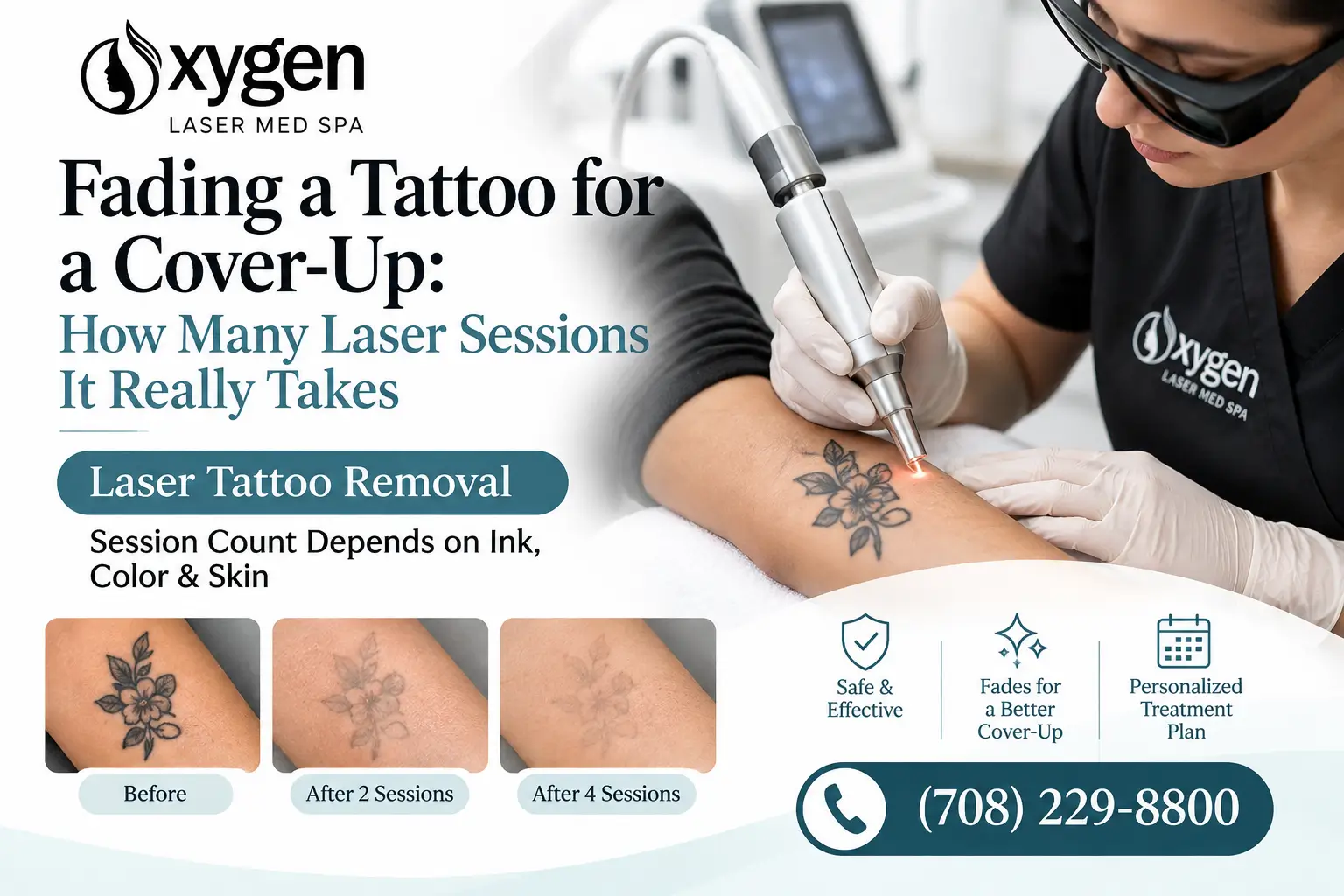
Laser tattoo removal works in two stages. The first happens in the treatment room, when the laser breaks ink into tiny particles. The second happens over the following weeks, as your body clears those particles and your skin heals. How you care for the area during that second stage affects your comfort, your skin and how well you are ready for the next session.
This guide covers laser tattoo removal aftercare: what is normal right after treatment, a day-by-day healing timeline, how to handle blistering and scabbing, what to avoid and when to call your provider. Whether you are removing a tattoo completely or fading it for a cover-up, the same aftercare principles apply.
Please note: This article is general information. Always follow the specific aftercare instructions your provider gives you after each session, since they are tailored to your skin and treatment.
After a laser tattoo removal session, redness, swelling, tenderness and a frosted white look on the tattoo are normal. Blisters and light scabbing can appear in the first days. Keep the area clean and covered as instructed, do not pop blisters or pick scabs, avoid soaking in pools or hot tubs and keep the area out of the sun. Most surface healing happens within about one to two weeks, while ink fading continues for several weeks, which is why sessions are spaced well apart. Call your provider if you notice signs of infection.
Questions about tattoo removal? Call (708) 229-8800 or contact our team.
What Is Normal Right After Treatment
| What You May Notice | Why It Happens | Usually Normal? |
|---|---|---|
| White, frosted look on the tattoo | A temporary reaction as the laser interacts with the ink | Yes; fades within minutes to hours |
| Redness and swelling | The skin’s natural response to treatment | Yes; usually settles within a few days |
| Tenderness, like a sunburn | Inflammation in the treated area | Yes |
| Pinpoint bleeding | Minor surface reaction | Yes, when slight |
| Blisters | Part of the skin’s healing response | Often; do not pop them |
| Scabbing and flaking | The surface skin renewing | Yes; let it fall off naturally |
| Itching | Healing skin | Common; avoid scratching |
A Typical Healing Timeline
Everyone heals differently, and responses vary with tattoo size, ink, location and skin type. This is a general picture:
| Timeframe | What to Expect | What to Do |
|---|---|---|
| First 24 to 48 hours | Redness, swelling, tenderness and possible blistering | Keep the area clean and covered as instructed; cool compresses may help |
| Days 3 to 7 | Blisters drain or flatten, light scabbing forms | Do not pick; keep using the recommended ointment |
| Week 2 | Scabs fall off and skin looks pink and new | Moisturize gently and protect from the sun |
| Weeks 3 to 8 | The body continues clearing ink; fading becomes visible | Protect from sun and wait for your next session |
This is why sessions are spaced several weeks apart: surface healing is quick, but ink clearance takes much longer. For session counts, read how many tattoo removal sessions you need.
Aftercare Step by Step
- Keep the bandage on for the time your provider recommends.
- Clean gently with mild soap and water, then pat dry with a clean towel.
- Apply the recommended ointment and a clean, non-stick dressing if advised.
- Use cool compresses to ease swelling and discomfort, avoiding ice directly on the skin.
- Keep the area elevated if it is on an arm or leg and swelling is noticeable.
- Wear loose clothing over the treated area to avoid rubbing.
What to Avoid While Healing
- Popping blisters or picking scabs, which raises the risk of infection and scarring.
- Soaking in baths, pools, hot tubs or lakes until the skin has healed.
- Sun exposure on the treated area; cover it, then use sunscreen once healed.
- Shaving over the area until it has fully healed.
- Harsh skincare products such as exfoliants or strong actives on the treated skin.
- Intense workouts that cause heavy sweating or friction on the area for the first few days.
Blisters: What to Know
Blistering is a common part of the healing response after tattoo removal. Leave blisters intact so the skin underneath is protected. If a blister breaks on its own, keep the area clean, apply the recommended ointment and cover it. Contact your provider if a blister is very large, very painful or shows signs of infection.
When to Call Your Provider
Contact your provider, or seek medical care if severe, if you notice:
- Increasing redness, warmth or swelling after the first few days
- Pus or a foul smell
- Fever or feeling unwell
- Severe or worsening pain
- Any reaction that concerns you
Aftercare That Supports Better Results
- Stay hydrated and maintain healthy habits, which support overall healing.
- Do not rush the next session. Proper spacing gives the skin time to heal and the body time to clear ink.
- Protect the area from sun between sessions, since tanned skin can affect treatment.
- Tell your provider how the area healed after each session so settings can be adjusted.
Fading for a Cover-Up?
If you are lightening a tattoo so an artist can cover it, the same aftercare applies after every session. Let the skin fully heal before getting new ink. Read our guide to tattoo fading before a cover-up for timing and how to work with your tattoo artist.
Learn More About Tattoo Removal
- Tattoo laser removal at Oxygen Med Spa
- Tattoo removal sessions and cost
- How many sessions tattoo removal takes
- Prices by session
Thinking about removing or fading a tattoo?
Book a consultation and we will review your tattoo, skin and goals and explain the aftercare plan.
Call (708) 229-8800
Book Appointment
Have a question first? Contact our team.
Frequently Asked Questions
Is blistering normal after laser tattoo removal?
Yes, blistering is a common part of the healing response. Do not pop blisters; keep the area clean and covered as your provider instructs.
How long does it take to heal after a session?
Surface healing usually takes about one to two weeks. Ink fading continues for several weeks after that.
Can I shower after tattoo removal?
Short showers are usually fine once your provider allows it. Avoid soaking the area in baths, pools or hot tubs until it heals.
Can I work out after a session?
Light activity is usually fine, but avoid heavy sweating and friction on the treated area for the first few days.
Why are sessions spaced weeks apart?
The skin needs time to heal, and the body needs time to clear the ink particles broken up by the laser.
Should I put sunscreen on the treated area?
Keep the area covered while healing. Once the skin is fully healed, use broad-spectrum sunscreen to protect it between sessions.
When should I call my provider?
Call if you notice increasing redness, warmth, pus, fever, severe pain or any reaction that worries you.
Heal Well, Fade Faster
Good laser tattoo removal aftercare keeps you comfortable, protects your skin and prepares you for the next session. Follow your provider’s instructions, let the skin heal naturally and give your body time to clear the ink.
Oxygen Med Spa provides laser tattoo removal in Orland Park. Call (708) 229-8800 to book your consultation.