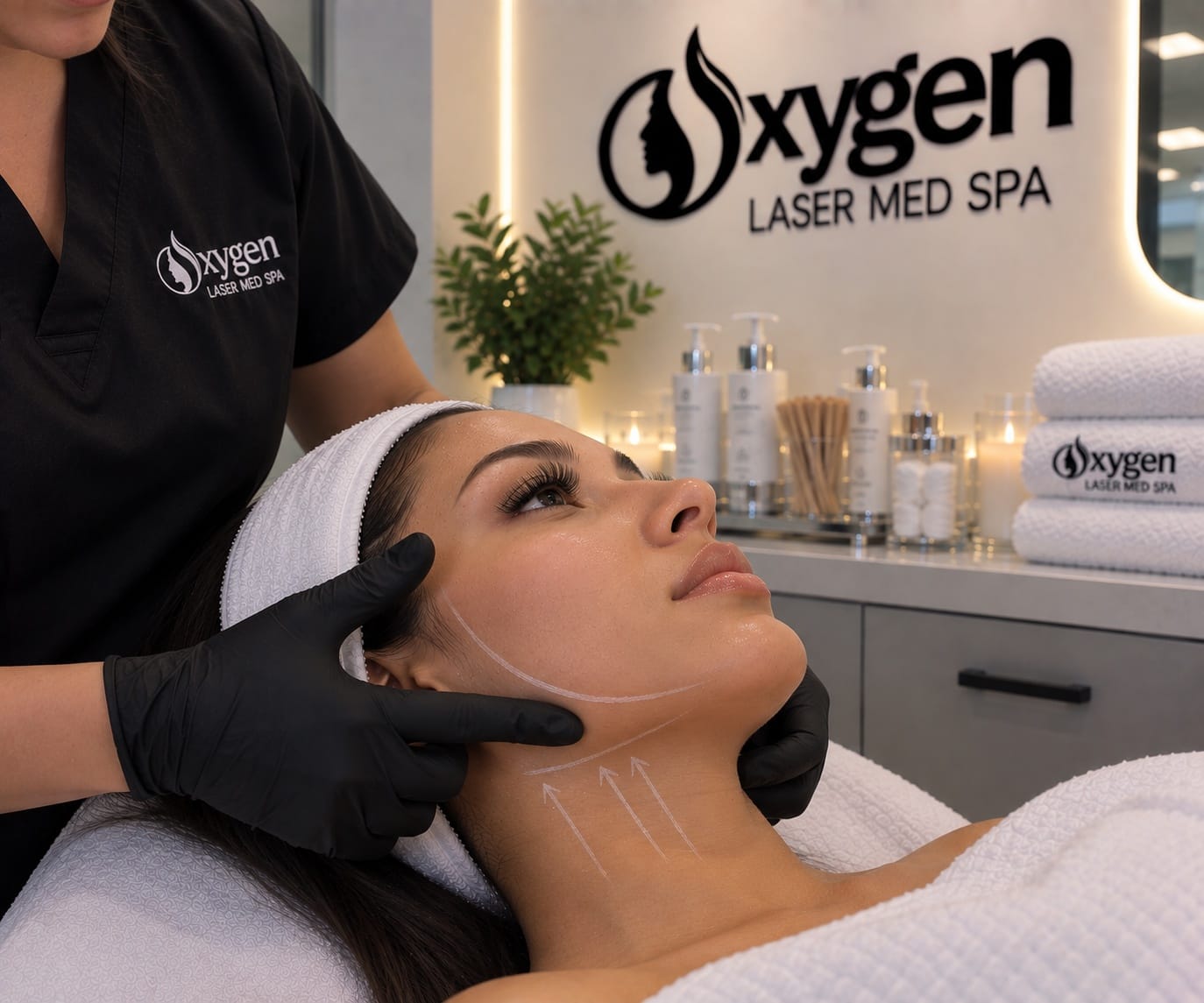
How Radiofrequency and Ultrasound Energy Target Skin Differently, What Each One Treats Best, and How to Know Which Fits Your Goal — A Guide for Orland Park, Tinley Park, Palos Heights, and Frankfort
By Kabirat A. · Oxygen Med Spa, Orland Park, IL · Updated September 2026
Oxygen Med Spa — 14360 South La Grange Road, Unit D, Orland Park, IL 60462, serving Orland Park, Tinley Park, Palos Heights, Oak Lawn, and Frankfort. Open Monday–Saturday, 10 AM–5 PM, closed Sunday. (708) 229-8800 · book online.
Quick answer: Both RF and ultrasound skin tightening stimulate collagen production without surgery, but they reach different depths and suit somewhat different concerns — distinct from treatments like skin resurfacing, which work on the surface rather than deeper tissue laxity. RF (radiofrequency) heats the deeper dermis broadly, making it well-suited for overall skin laxity and mild-to-moderate sagging across a larger area. Ultrasound energy can be focused more precisely at specific depths, including deeper than RF typically reaches, making it a common choice for more targeted lifting, particularly around the jawline, neck, and brow. Neither is universally better — the right choice depends on what you’re actually trying to address.
How RF Skin Tightening Works
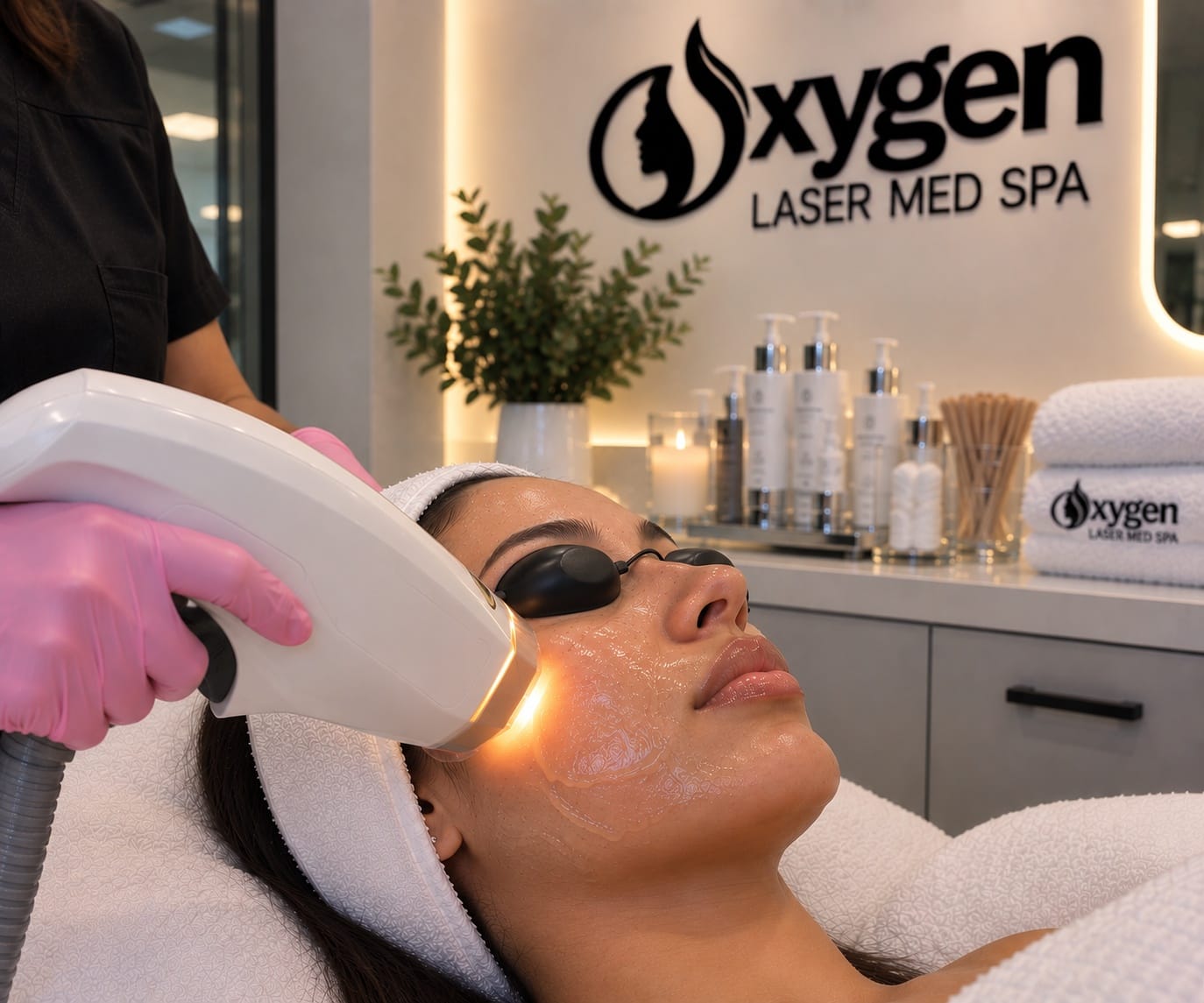
Radiofrequency devices deliver energy that heats the deeper layers of skin, which triggers a controlled healing response and stimulates new collagen and elastin production over the following weeks and months. The heating effect is generally broad and even across the treated area, making it well suited for larger zones like the abdomen, arms, or overall facial laxity rather than one small, precise spot.
How Ultrasound Skin Tightening Works
Ultrasound-based treatments use focused sound wave energy that can be directed at specific depths within the skin and underlying tissue, including levels deeper than RF typically penetrates. This precision is what makes ultrasound treatments popular for targeted lifting in specific areas — the treatment can be focused exactly where sagging is most noticeable rather than treating a broader area more generally.
What RF Tends to Treat Best
Overall skin laxity across broader areas — the lower face and jawline as a whole, the neck, or body areas like the abdomen and arms — tends to respond well to RF’s broader heating pattern. It’s often chosen by clients looking for general firming and improved skin quality rather than lifting one specific structural area.
What Ultrasound Tends to Treat Best
More targeted concerns — a sagging jawline, brow lift, or specific areas of laxity around the neck — often respond well to ultrasound’s ability to focus energy at a precise depth and location. This precision makes it a common choice for clients wanting a more defined lifting effect in a specific area rather than broad, general firming.
Downtime and Comfort: What to Actually Expect
Both treatments are non-surgical with minimal to no downtime, though the sensation during treatment differs. RF treatments typically feel like a warming sensation as the energy heats the skin. Ultrasound treatments can feel more intense in bursts, since the energy is more focused and reaches deeper tissue — some clients describe brief moments of noticeable heat or discomfort during an ultrasound session, particularly over bony areas like the jaw.
How Many Sessions Each One Typically Needs
RF skin tightening often works well as a series of sessions spaced weeks apart, with cumulative improvement building over the course of treatment. Ultrasound treatments frequently show results from a single session, with continued collagen-building improvement over the following two to three months, though some clients choose annual or periodic maintenance sessions to sustain results.
Can You Combine Both?
Yes, some clients use RF for broader, ongoing skin quality maintenance and ultrasound for a more targeted, longer-lasting lift in a specific area. This isn’t necessary for everyone, but it’s worth discussing at a consultation if you have both a general firming goal and a specific area of more noticeable laxity.
How These Compare to Other Treatments
Both RF and ultrasound work by stimulating collagen production rather than removing skin layers, which is different from how microneedling or a chemical peel work. If texture, tone, or surface-level concerns are your primary issue rather than laxity or sagging, those treatments may be more directly targeted to your goal, either alongside or instead of skin tightening.
How to Decide Which One Fits You
Start with what’s actually bothering you. General looseness or firmness across a broader area often points toward RF. A specific area of sagging you want lifted more precisely often points toward ultrasound. If you’re not sure, a consultation with our experienced team can help assess your specific concern and recommend the option — or combination — most likely to get you the result you actually want.
Frequently Asked Questions
Which one gives more dramatic results?
Neither is universally more dramatic — RF tends to produce broader, more gradual firming, while ultrasound can produce a more noticeable lift in a targeted area, particularly after a single session.
Does ultrasound skin tightening hurt more than RF?
Many clients find ultrasound sessions involve more intense, momentary heat sensations compared to the steadier warming of RF, though both are generally well tolerated.
How long do results last?
Both stimulate new collagen production, and results typically last many months to over a year, though this varies by individual and by ongoing skin aging, which is a natural, continuous process.
Can I do both treatments together?
Yes, some clients combine both for broader maintenance plus targeted lifting, discussed and planned at a consultation.
Is one treatment better for younger patients with early laxity?
This depends more on the specific area and degree of concern than age alone — a consultation can help determine the most appropriate option for early-stage laxity.
What does it cost?
Pricing varies by treatment and area. See our 2026 price list for current rates.
Where are you, and how do I book?
14360 South La Grange Road, Unit D, Orland Park, IL 60462. Book online or call; Monday–Saturday, 10 AM to 5 PM.
Find the Right Fit for Your Concern
The right treatment depends on where and how you’re noticing laxity, best assessed at a consultation. Book online or call (708) 229-8800.
Oxygen Med Spa · 14360 South La Grange Road, Unit D, Orland Park, IL 60462 · (708) 229-8800 · Mon–Sat, 10 AM–5 PM · Closed Sunday