Quick answer: When comparing HydraFacial vs microdermabrasion, the best choice depends on your skin concerns, sensitivity and desired results. HydraFacial combines cleansing, exfoliation, extraction and hydration in a multi-step treatment. Microdermabrasion uses a device to exfoliate the outermost layer of skin and may help improve the appearance of rough texture and dullness. Both can make skin look smoother, but neither guarantees permanent pore reduction or eliminates every type of clogged pore. If your main concern is congestion combined with dryness or dullness, discuss HydraFacial with a qualified skincare professional. If your skin is sensitive, irritated or inflamed, seek advice before booking either treatment.
Clogged pores, rough texture and dull-looking skin can make your complexion feel less smooth and radiant, even when you follow a regular skincare routine. Professional facials can help address some of these concerns, but choosing between treatments can be confusing.
Two popular options are HydraFacial and microdermabrasion. Both involve exfoliation, but they use different techniques and offer different treatment experiences. Understanding those differences can help you choose a facial that fits your skin type, comfort level and skincare goals.
This HydraFacial vs microdermabrasion guide compares how each treatment works, what it may do for clogged pores and dull skin, how sensitivity and downtime differ, and what to consider when comparing session prices and memberships.
If you are considering a professional facial, explore the HydraFacial service at My Oxygen Spa in Orland Park to learn more about the treatment and discuss whether it suits your skin concerns.
HydraFacial vs Microdermabrasion: What Is the Difference?
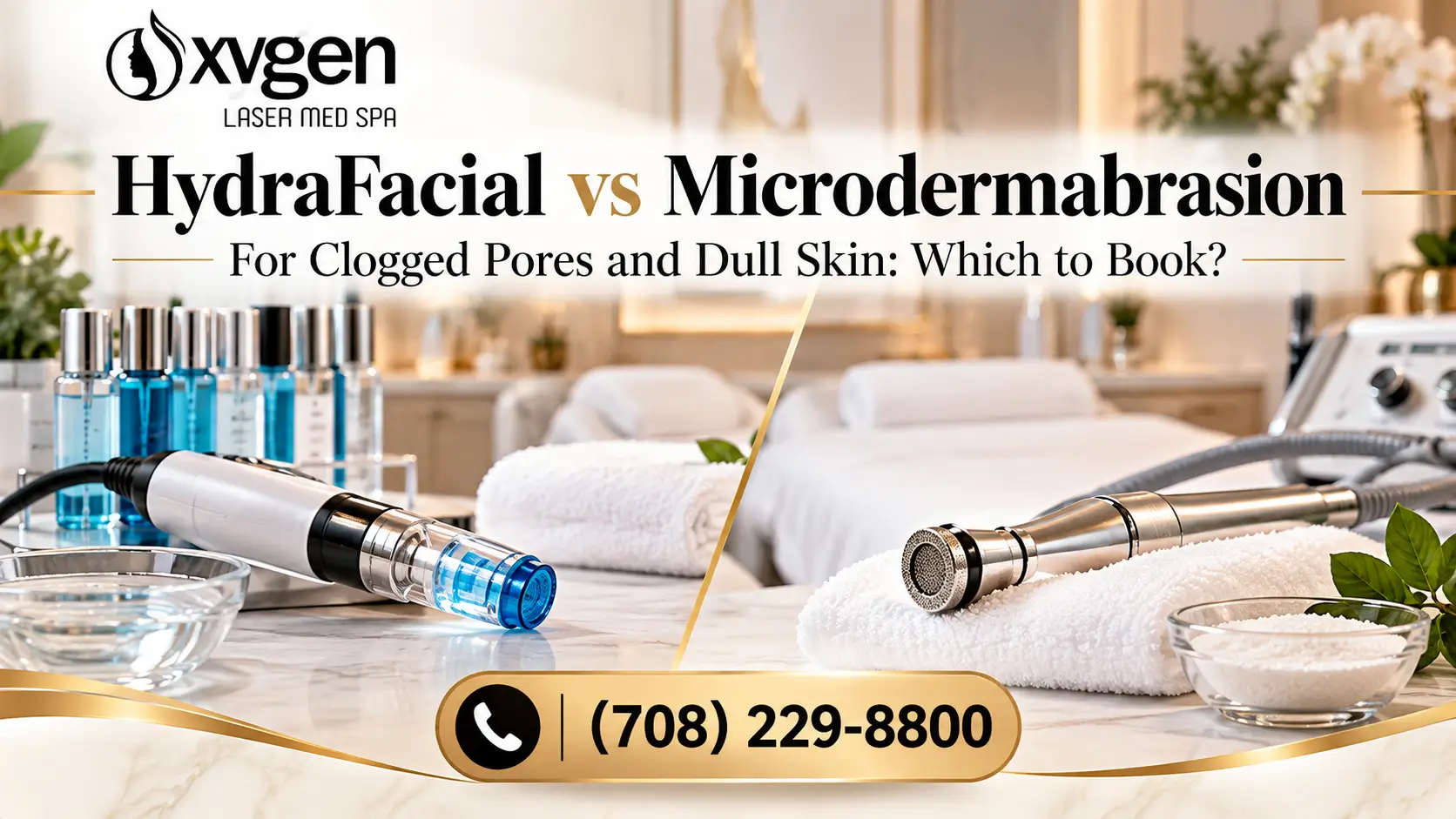
Although both treatments exfoliate the skin, they work differently. HydraFacial is a multi-step facial that typically combines cleansing, exfoliation, extraction and hydration using a specialized device. Microdermabrasion mechanically exfoliates the skin’s outermost layer using a device that employs a diamond tip or fine crystals, depending on the system.
| Feature | HydraFacial | Microdermabrasion |
|---|---|---|
| How it works | Multi-step cleansing, exfoliation, extraction and hydration | Mechanical exfoliation of the outermost skin layer |
| Clogged pores | Designed to cleanse pores and extract surface debris | Primarily exfoliates the skin surface; it is not a substitute for targeted pore treatment |
| Dullness and texture | Can improve the appearance of dullness and surface roughness | Can help smooth rough texture and improve the appearance of dull skin |
| Hydration | Hydrating products are part of the treatment process | Moisturizer is generally applied after exfoliation |
| Downtime | Often minimal, although temporary redness or sensitivity can occur | Often minimal, but redness, dryness or irritation can occur |
| Best starting point | People seeking a combined cleansing, extraction and hydration treatment | People seeking straightforward surface exfoliation after a suitability assessment |
Neither treatment is automatically better for everyone. Your skin’s current condition, sensitivity, medical history and treatment goals matter more than choosing the trendiest facial.
How HydraFacial Works for Clogged Pores and Dull Skin
HydraFacial is designed as a multi-step treatment. The exact steps and products may vary by service and treatment configuration, but the process commonly includes cleansing, exfoliation, extraction and hydration.
1. Cleansing and Exfoliation
The treatment begins by cleansing the skin and exfoliating surface buildup. Removing dead skin cells can help the complexion look smoother and may make skin appear brighter.
2. Pore Extraction
A specialized device is used to help remove debris and impurities from pores. This may be useful for people concerned about congestion and blackheads, although results vary and not every type of blemish responds to the same treatment.
3. Hydration
Hydrating products are applied as part of the treatment. This can help the skin feel more comfortable after exfoliation and support a fresh, dewy appearance.
What Results Can You Expect?
Some people notice a smoother feel and a brighter-looking complexion after one session. Results depend on the individual’s skin, the treatment performed and their home skincare routine. HydraFacial does not permanently shrink pores or guarantee the removal of all blackheads.
If you have persistent acne, inflamed breakouts or deep congestion, ask a qualified skincare professional or dermatologist whether another treatment would be more appropriate.
How Microdermabrasion Works
Microdermabrasion is a non-surgical exfoliation procedure that removes some of the outermost dead skin cells. Depending on the device, it uses a diamond-tipped applicator or fine crystals along with suction.
Surface Exfoliation
By exfoliating the surface, microdermabrasion may improve the appearance of rough texture and mild dullness. It can also help some people achieve a smoother-looking complexion.
What About Clogged Pores?
Microdermabrasion is primarily a surface-exfoliation treatment. Although it may improve the appearance of skin texture, it is not specifically designed to extract every clogged pore. Blackheads, whiteheads and acne can require different approaches depending on their type and severity.
What Results Can You Expect?
Some people notice smoother skin after treatment, but temporary redness, tightness or dryness can occur. Results are not permanent, and repeated sessions should be based on skin tolerance and professional guidance rather than a fixed schedule for everyone.
Which Facial Is Better for Clogged Pores?
If clogged pores are your main concern, consider what type of congestion you have and whether your skin also feels dry or looks dull.
| Your Main Concern | Option to Discuss | Why |
|---|---|---|
| Congestion and dullness | HydraFacial | Combines cleansing, extraction and hydration in one treatment |
| Rough surface texture | Microdermabrasion may be suitable | Mechanical exfoliation targets the outermost skin layer |
| Dryness with dullness | Discuss a hydration-focused facial | Treatment selection should account for the skin barrier and comfort |
| Inflamed acne or irritated skin | Professional assessment first | Exfoliation may worsen irritation in some skin conditions |
| Persistent blackheads | A targeted acne or congestion plan | Ongoing pore congestion may need consistent home care or medical treatment |
Blackheads and sebaceous filaments are not the same thing. Sebaceous filaments are normal structures that help move oil through pores, and they naturally become visible again after extraction. Trying to remove them completely can irritate the skin.
Which Treatment Is Better for Dull Skin and Uneven Texture?
Dullness can have several causes, including surface buildup, dryness, irritation and uneven pigmentation. Choosing a facial based on the underlying concern is more useful than relying on a treatment name alone.
HydraFacial for a Fresh, Hydrated Appearance
HydraFacial combines exfoliation with cleansing and hydration. It may be a reasonable option if you want skin to look refreshed and feel smoother without relying exclusively on mechanical exfoliation.
Microdermabrasion for Surface Texture
Microdermabrasion may be suitable for some people seeking improvement in superficial roughness and mild dullness. However, it can cause irritation, and stronger or more frequent exfoliation does not necessarily produce better results.
Neither facial should be expected to treat every cause of uneven pigmentation, deeper acne scars or significant skin changes. Those concerns may require a different treatment plan.
Sensitivity, Side Effects and Downtime
Both treatments are often performed without significant downtime, but temporary reactions are possible. The likelihood and severity depend on the treatment settings, products used and your skin’s condition.
| Consideration | HydraFacial | Microdermabrasion |
|---|---|---|
| Possible reaction | Temporary redness, sensitivity or irritation from products or extraction | Temporary redness, dryness, tightness or irritation |
| Skin sensitivity | Product ingredients and treatment intensity matter | Mechanical exfoliation may aggravate sensitive or inflamed skin |
| Aftercare | Gentle skincare, moisturizer and sun protection | Gentle skincare, moisturizer and sun protection |
| When to postpone | Active irritation, skin infection or a condition requiring medical review | Inflamed acne, irritated skin or a compromised skin barrier |
Tell your provider if you use retinoids, exfoliating acids or prescription acne treatments, or if you have a history of cold sores, eczema, rosacea or pigment changes after irritation. Recent peels, laser procedures and other skin treatments may also affect whether a facial is appropriate.
Follow the provider’s aftercare instructions, avoid harsh exfoliation immediately after treatment and use broad-spectrum sunscreen. If you experience severe pain, blistering, marked swelling or worsening symptoms, seek medical advice.
How Often Should You Book HydraFacial or Microdermabrasion?
There is no single treatment schedule that works for every skin type. The right frequency depends on the treatment intensity, your skin’s response, the condition being addressed and the other products or procedures in your routine.
Some people choose regular HydraFacial appointments as part of a maintenance routine. Microdermabrasion sessions should likewise be spaced according to professional advice and skin tolerance. More frequent exfoliation can lead to dryness, irritation and increased sensitivity rather than better results.
Before committing to a package, ask the provider to recommend an initial treatment plan and explain how the schedule may change based on your results.
HydraFacial vs Microdermabrasion Cost: What Should You Compare?
Prices vary by spa, location, treatment configuration, provider experience and any add-ons. A standard facial, an upgraded HydraFacial and a microdermabrasion session may not include the same steps or products, so compare what is actually provided.
| Cost Factor | What to Check |
|---|---|
| Single-session price | Treatment duration, included steps and provider qualifications |
| Upgrades and add-ons | Whether boosters, masks or other products are included or charged separately |
| Packages and memberships | Total commitment, session limits, expiration rules and cancellation terms |
| Aftercare | Whether you need additional skincare products or follow-up visits |
| Value per visit | The effective price per treatment and whether you will realistically use every session |
Rather than choosing the cheapest facial, compare the total cost with the treatment goals you want to achieve. A lower-priced service may be a better value if it suits your skin and requires fewer unnecessary add-ons.
Are Facial Memberships Worth It?
A membership may reduce the per-session price if you regularly book treatments and the included services match your needs. However, a discounted package is not automatically a good deal if it encourages you to book treatments more frequently than your skin can tolerate.
Before joining, check:
- The monthly or annual fee and the number of included treatments.
- Whether unused sessions roll over or expire.
- Whether the membership covers the exact facial you want.
- Additional charges for upgrades, boosters or other services.
- Cancellation requirements and any minimum commitment.
- Whether the recommended treatment frequency makes sense for your skin.
If you are trying a treatment for the first time, consider starting with one session before purchasing a larger package. This gives you an opportunity to evaluate your skin’s response and decide whether the treatment is worth repeating.
How to Choose the Right Facial for Your Skin
Use these questions to guide your consultation:
- What is my main concern? Congestion, dullness, rough texture and inflamed acne may need different approaches.
- How sensitive is my skin? Share any history of irritation, rosacea, eczema or pigment changes.
- What products am I using? Mention prescription treatments, retinoids and exfoliating acids.
- What results are realistic? Ask what one session may achieve and what it cannot treat.
- What is the complete price? Confirm the treatment steps, add-ons and aftercare costs.
- How often should I return? Request a schedule based on your skin’s response rather than a fixed sales package.
A qualified provider should explain the treatment, discuss possible reactions and recommend postponing exfoliation if your skin is currently irritated or unsuitable for the procedure.
Frequently Asked Questions
Book Your Facial Consultation at My Oxygen Spa
Choosing between HydraFacial and microdermabrasion starts with understanding what your skin needs. If your main concerns are clogged pores, dullness and surface texture, a professional consultation can help determine whether a cleansing-and-hydration treatment or mechanical exfoliation is the better fit.
My Oxygen Spa offers HydraFacial services in Orland Park. Explore our HydraFacial service page to learn more and discuss your skincare goals with the spa.
Choose a treatment based on suitability, realistic expectations and aftercare—not just a promise of instant results. A consistent, gentle skincare routine and daily sun protection remain important between professional appointments.