What to Actually Expect Each Day, What Helps Healing Along, and When You’ll Look Like Yourself Again — A Guide for Orland Park, Tinley Park, Palos Heights, and Frankfort
By Kabirat A. · Oxygen Med Spa, Orland Park, IL · Updated September 2026
Oxygen Med Spa — 14360 South La Grange Road, Unit D, Orland Park, IL 60462, serving Orland Park, Tinley Park, Palos Heights, Oak Lawn, and Frankfort. Open Monday–Saturday, 10 AM–5 PM, closed Sunday. (708) 229-8800 · book online.
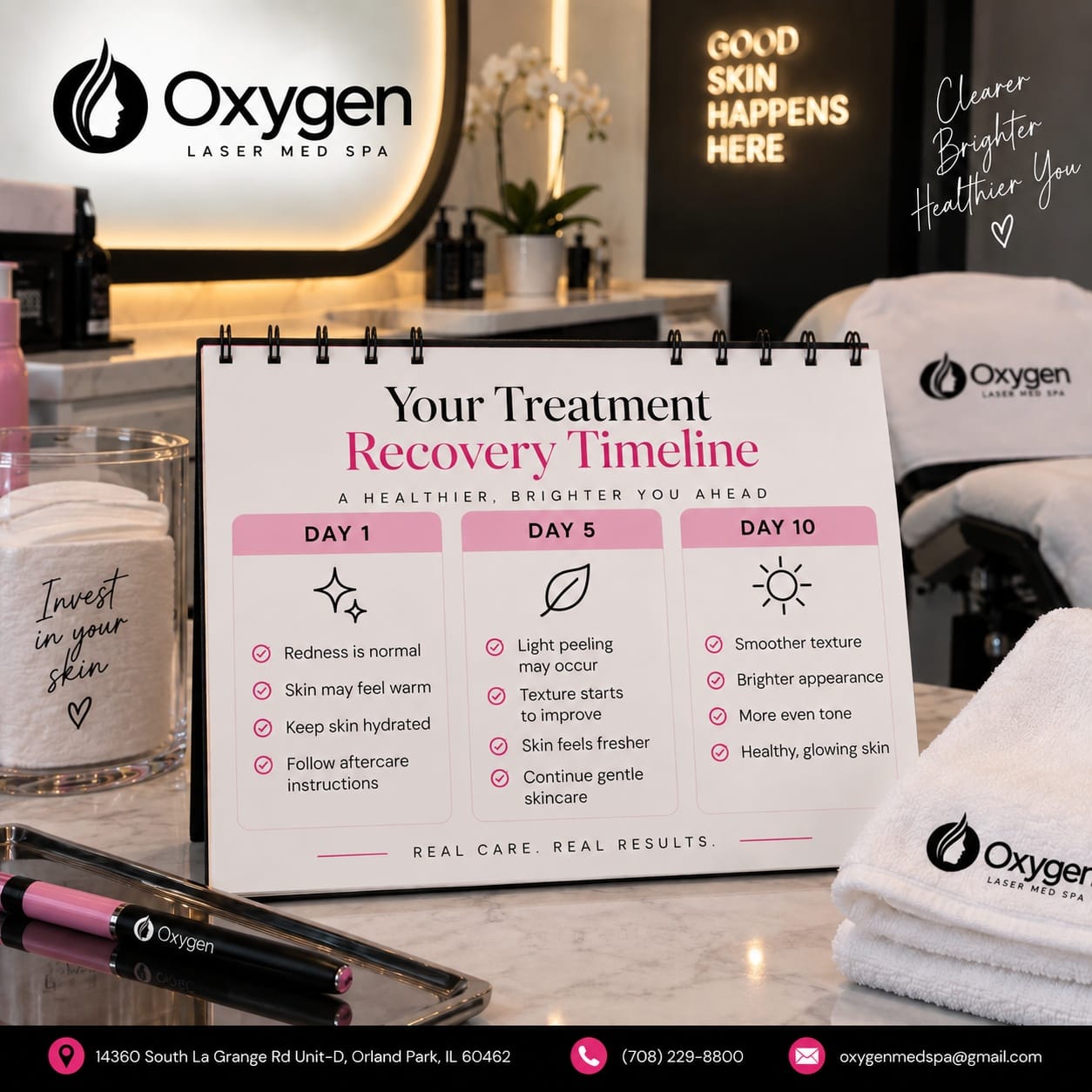
Quick answer: Recovery from CO2 laser resurfacing typically follows a predictable pattern over five to ten days — redness and swelling in the first couple of days, followed by peeling and flaking as new skin surfaces, with most visible healing complete within a week to ten days and continued improvement over the following weeks. Our experienced team walks every client through this timeline before treatment, so there are no surprises. Knowing what’s normal at each stage helps you plan around it and avoid worrying about something that’s simply part of the expected process.
Day 1: Redness, Warmth, and Tightness
Immediately after treatment and through the first 24 hours, skin looks red and feels warm, similar to a moderate sunburn. Some swelling is common, particularly around the eyes if the treatment area included the upper face. Keeping the area clean and following your provider’s specific aftercare instructions — typically gentle cleansing and a recommended ointment or barrier cream — is the main focus on day one. This is also when discomfort, if any, tends to be most noticeable, generally described as tightness or warmth rather than sharp pain.
Days 2–3: Swelling Peaks, Then Starts to Settle
Swelling often peaks around day two before gradually improving. Skin may look and feel more taut during this window. Continuing gentle cleansing and moisturizing as directed supports the healing process. This is generally when skin starts to take on a darker, more bronzed appearance as the outer layer prepares to shed — this is expected and not a sign of a problem.
Days 3–5: Peeling and Flaking Begins
This is the stage most people are least prepared for, even when they’ve been told to expect it. Skin begins visibly peeling and flaking as the treated outer layer sheds to reveal fresh skin underneath. It can look more dramatic than it feels — most people describe this stage as more of a nuisance than painful. Resist the urge to pick or peel skin manually; letting it shed naturally reduces the risk of irritation, uneven healing, or scarring.
Days 5–7: New Skin Emerges, Pink and Sensitive
As peeling completes, the fresh skin underneath is typically pink and noticeably more sensitive than usual. This new skin is also more vulnerable to sun damage, which is why strict sun protection becomes especially critical starting here and continuing for weeks afterward. Makeup is generally not recommended until this stage has progressed enough that your provider confirms skin is ready, since applying products too early can trap bacteria in still-healing skin.
Days 7–10: Most Visible Healing Complete
By this point, most people see the bulk of visible healing resolved — redness has faded significantly, peeling has completed, and skin looks noticeably smoother than before treatment. Some residual pinkness can persist a bit longer for certain skin types, gradually fading over the following one to two weeks.
Weeks 2–4 and Beyond: Continued Improvement
While the visible healing phase wraps up within the first ten days for most people, the deeper collagen-building process CO2 resurfacing triggers continues for weeks to months afterward. This means results keep improving gradually well beyond the point where your skin looks outwardly healed — texture and tone often continue refining over the following months.
What Helps Healing Go Smoothly
Follow your provider’s specific product recommendations rather than substituting your usual skincare routine during the active healing phase, since typical products can be too harsh for freshly treated skin. Stay diligent about sun protection well beyond the visible healing window, since new skin remains more UV-sensitive for an extended period. Avoid strenuous exercise and excessive sweating during the first several days, since this can irritate healing skin. Stay hydrated and avoid alcohol during the initial recovery days, since both can affect healing and increase swelling.
What’s Not Normal
Signs of infection — increasing pain rather than gradual improvement, spreading redness beyond the treated area, pus, or fever — are reasons to contact your provider rather than waiting it out. Similarly, if peeling seems unusually delayed or uneven, or if you have concerns at any stage, it’s always better to check in than to assume everything is fine.
Planning Your Timeline Around Recovery
Given the visible healing window, most people plan CO2 resurfacing at least one to two weeks before any event they want to look their best for, giving buffer beyond the ten-day mark for any residual pinkness to fully resolve. This is part of why fall and winter — with fewer outdoor events and lower sun intensity — are often recommended timing windows for this specific treatment.
How This Compares to Lighter Treatments’ Recovery
If this recovery timeline sounds like more than you want to commit to, lighter options like chemical peels or microneedling involve significantly less downtime, though typically with less dramatic single-session results. Our broader skin resurfacing options can help you compare treatment depth and downtime side by side. This trade-off is worth discussing at a consultation based on your specific goals and how much recovery time you’re able to plan around.
Frequently Asked Questions
How long until I can wear makeup again?
Typically once peeling has fully completed and your provider confirms skin is ready, generally around the one-week mark, though this varies by individual healing.
Is the peeling stage painful?
Most people describe it as more of a cosmetic nuisance than painful — tightness and visible flaking rather than significant discomfort.
When will I look like myself again?
Most visible healing resolves within seven to ten days, though some residual pinkness can persist a bit longer depending on skin type.
Can I speed up the healing process?
Following your provider’s specific aftercare instructions closely is the best way to support smooth healing — there’s no way to safely accelerate the biological timeline itself.
What does it cost?
Pricing varies by treatment area and depth. See our 2026 price list for current rates.
Where are you, and how do I book?
14360 South La Grange Road, Unit D, Orland Park, IL 60462. Book online or call; Monday–Saturday, 10 AM to 5 PM.
Know What to Expect Before You Book
Understanding the recovery timeline helps you plan your schedule around it with confidence. Book online or call (708) 229-8800.
Oxygen Med Spa · 14360 South La Grange Road, Unit D, Orland Park, IL 60462 · (708) 229-8800 · Mon–Sat, 10 AM–5 PM · Closed Sunday