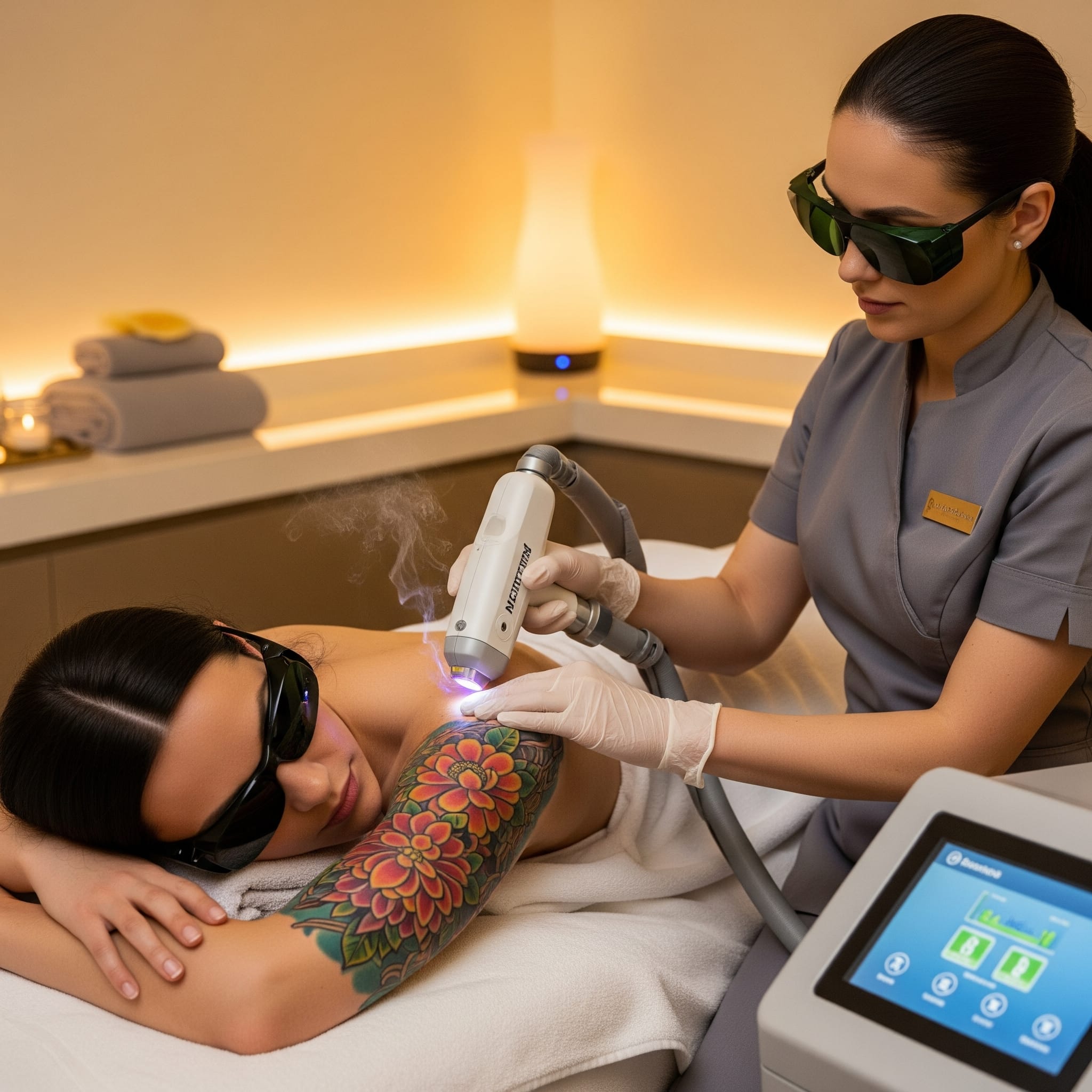
Regretting a tattoo is more common than you might think. Whether your tattoo no longer represents you, was poorly executed or simply does not fit your style anymore, modern laser technology can make significant fading or removal possible.
One of the first questions people ask is: How many tattoo laser removal sessions will I need? There is no single number that applies to every tattoo. The total treatment time depends on factors such as ink color, tattoo size, ink density, location and how your body responds to treatment.
At Oxygen Med Spa in Orland Park, your provider can evaluate your tattoo and create a personalized treatment plan based on your goals.
How Does Laser Tattoo Removal Work?
Laser tattoo removal uses concentrated pulses of light to target tattoo ink beneath the skin. The laser energy breaks larger ink particles into smaller fragments that your body’s natural processes can gradually clear.
Because your body needs time to process and remove these fragmented ink particles, tattoo removal cannot usually be completed in a single appointment. Treatments are performed as a series of sessions, with recovery time between appointments.
The tattoo gradually becomes lighter as treatment progresses.
Learn more about our tattoo laser removal service in Orland Park and what to expect from the treatment process.
How Many Tattoo Laser Removal Sessions Do You Need?
Most tattoos require multiple treatments. A common range is approximately 5 to 10 tattoo laser removal sessions for significant fading or substantial removal, although some tattoos may require fewer sessions while others can take considerably more.
Treatments are typically spaced several weeks apart. This interval gives the skin time to recover and allows your body time to clear the fragmented ink before the next treatment.
It is important to think of tattoo removal as a gradual process rather than a quick procedure. Your provider can give you an estimated treatment range, but the exact number of sessions cannot always be predicted in advance.
What Factors Affect the Number of Sessions?
Several factors influence how quickly a tattoo responds to laser treatment.
1. Ink Color
The colors used in your tattoo can make a significant difference. Darker inks, particularly black, often respond well to laser treatment.
Some colors, including certain greens, blues and yellows, can be more challenging and may require additional treatments depending on the specific pigment and laser technology being used.
2. Tattoo Age
Older tattoos may have already experienced some natural fading. As a result, they can sometimes respond differently from newer tattoos with dense, vibrant pigment.
However, tattoo age alone does not determine how many treatments you will need.
3. Ink Density and Depth
A heavily saturated professional tattoo may contain significantly more ink than a light amateur tattoo. Tattoos with dense or deeply deposited pigment can therefore require more treatment sessions.
Small tattoos are not automatically easier to remove if they contain a high concentration of ink.
4. Tattoo Location
Where your tattoo is located can also influence how quickly it fades. Areas with better circulation may respond differently from areas farther from the body’s core.
Tattoos on the hands, feet and lower legs can sometimes take longer to fade than tattoos located closer to the torso.
5. Your Individual Response
Every person’s skin and immune response are different. Your body’s ability to process and clear fragmented pigment can affect the pace of tattoo fading.
Your skin type, overall skin condition and the characteristics of the tattoo all play a role in determining your treatment timeline.
Does Laser Tattoo Removal Hurt?
The sensation varies from person to person, but many clients describe laser tattoo removal as a quick snapping or stinging sensation, often compared with the feeling of a rubber band snapping against the skin.
Treatment sessions are generally relatively quick, particularly for smaller tattoos. Your provider can also discuss ways to improve comfort during the procedure.
What Happens Between Tattoo Removal Sessions?
After treatment, the tattooed area may temporarily appear red or swollen. Some people may also experience blistering or other temporary skin reactions as part of the healing process.
Following your provider’s aftercare instructions is important. Keep the treated area clean and protected, avoid unnecessary sun exposure and do not pick or disturb the skin as it heals.
Between appointments, the tattoo may gradually become lighter as your body continues processing the fragmented pigment.
The waiting period between sessions is an important part of the process. Treating too frequently does not necessarily make tattoo removal faster because your skin and body need time to recover and clear the ink.
Can Every Tattoo Be Completely Removed?
Many unwanted tattoos can be significantly faded, and some may eventually become difficult to see. However, complete removal is not guaranteed.
Certain colors, dense tattoos, deep pigment and individual skin responses can affect the final outcome. In some cases, a faint outline or residual pigment may remain.
During your consultation, your provider can examine the tattoo and discuss realistic expectations rather than promising a specific number of sessions or a guaranteed result.
Start Your Tattoo Removal Journey in Orland Park
If you are ready to move on from unwanted ink, understanding the number of tattoo laser removal sessions you may need is an important first step.
At Oxygen Med Spa in Orland Park, our team can assess your tattoo and develop a personalized treatment plan based on its size, color, location and other characteristics.
Ready to discuss your options? Call (708) 229-8800 or book your consultation online.
Learn more about our laser tattoo removal treatment in Orland Park and take the first step toward fading unwanted ink.